Customer Background
A Guangzhou-based leather products manufacturer specializes in mid-to-high-end leather shoes, leather goods, and automotive seat covers, processing over 300,000 square feet of leather materials annually. Primary cutting materials include genuine leather (cowhide, sheepskin, 1-3mm), PU synthetic leather (1-2mm), and microfiber leather (1.5-5mm).
The factory previously operated three CO2 laser cutting machines for leather processing. However, as downstream brand clients raised their quality and environmental standards for leather goods, the inherent defects of laser cutting became increasingly problematic, resulting in persistently high return rates.
Laser Cutting Pain Points
When laser cutting genuine leather and PU leather, the high-temperature beam leaves obvious charring marks on the cut edges, causing yellowing and blackening that severely compromises the appearance quality of leather products. Light-colored genuine leather and white PU leather are particularly affected, with edge charring being a frequent cause of customer returns.
The high temperatures generated by laser cutting cause thermal shrinkage and deformation of leather materials, especially thin leathers under 1mm, where dimensional deviations after cutting significantly affect the precision of subsequent sewing processes. Additionally, laser cutting produces large amounts of pungent burning odor, requiring powerful exhaust systems in the workshop and creating significant environmental compliance pressure.
After laser cutting, leather workpieces require post-processing to remove charred edges, including grinding and edge trimming. Each batch requires 2-3 hours of post-processing, severely impacting production efficiency and delivery schedules.
ZCCUTTER Solution: Cold Cutting with Dual-Head Efficiency
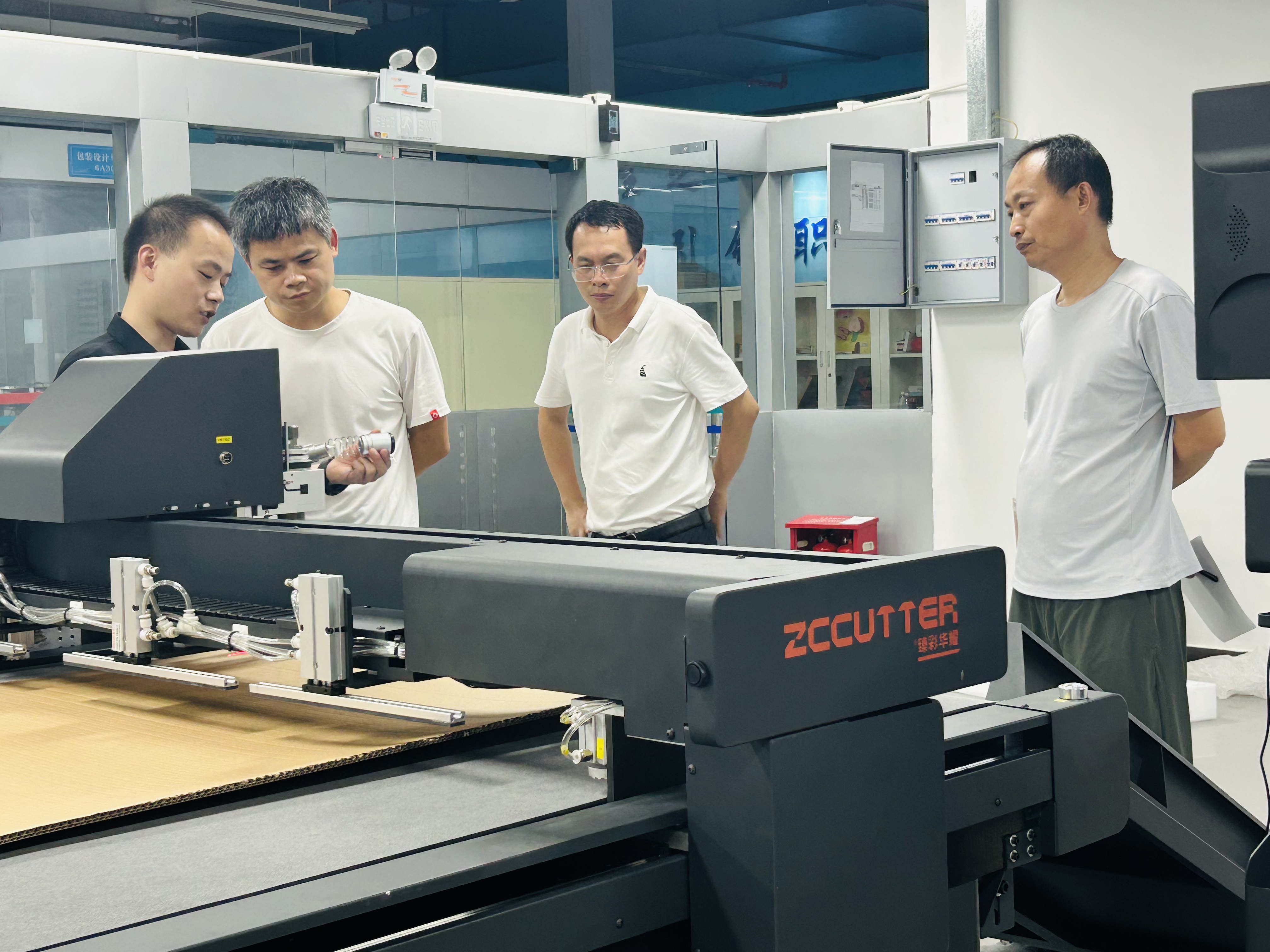
The factory introduced the ZCRB1410 dual-head vibrating knife cutting machine, equipped with a large 1400mm × 1000mm work surface. The dual-head design supports simultaneous installation of two tools, enabling quick switching between different materials and thicknesses. The equipment uses vibrating knife cold cutting technology, where the blade achieves precise separation of leather materials through high-frequency vibration, with zero thermal impact throughout the entire process.
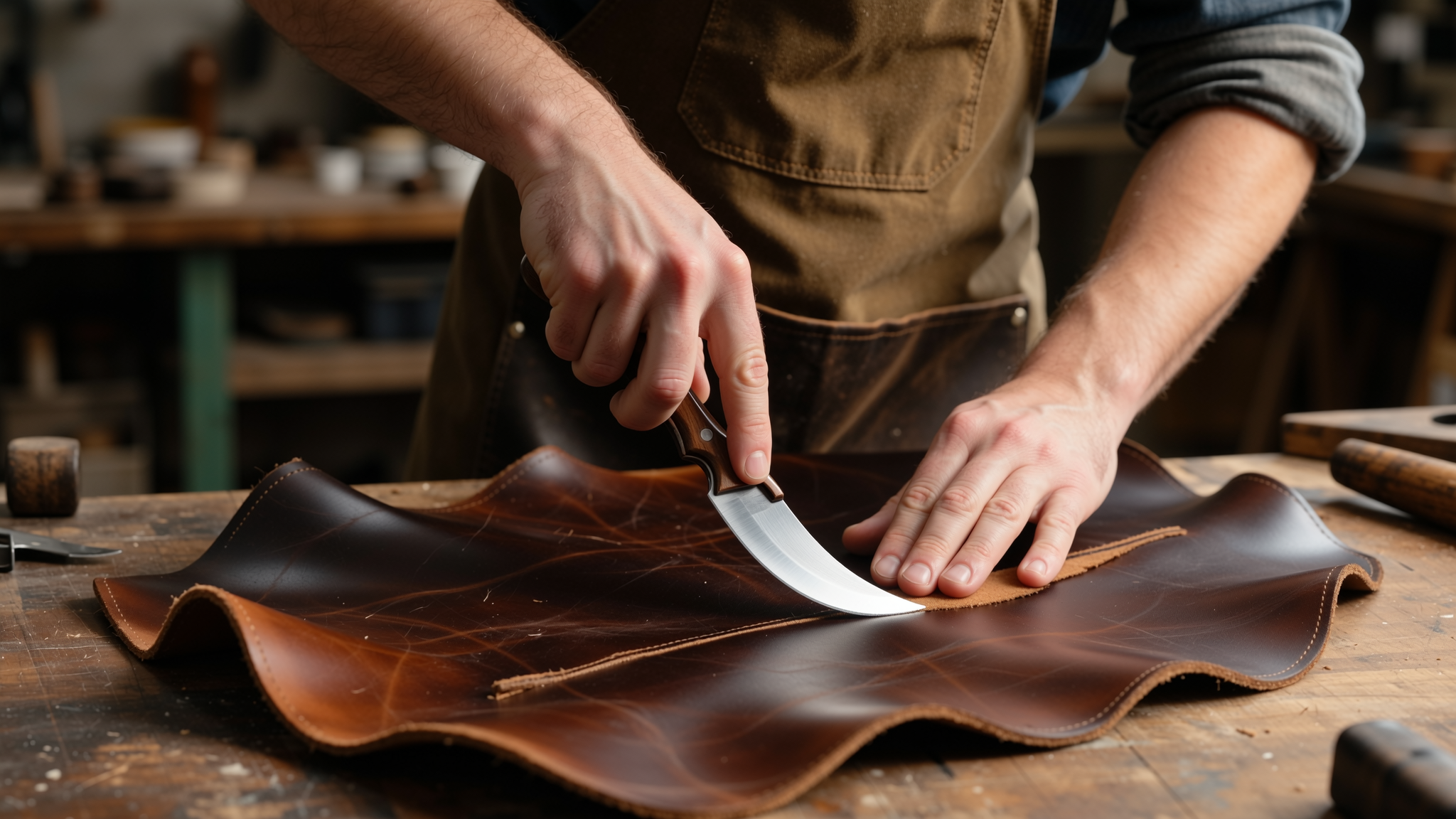
Head-to-Head Comparison: Laser vs. Vibrating Knife
The following table summarizes the key performance differences between the two cutting technologies as observed in actual production:
| Comparison Item | CO2 Laser Cutting | ZCRB1410 Vibrating Knife |
|---|---|---|
| Cutting Principle | High-temperature beam melting/vaporizing | High-frequency mechanical vibration, cold cutting |
| Edge Quality | Charring, yellowing, blackening | Clean, smooth, preserves original color |
| Thermal Impact | Significant — causes shrinkage and deformation | None — material properties fully preserved |
| Post-Processing | Required: 2-3 hrs/batch for de-charring and grinding | None — cut-and-use immediately |
| Defect Rate | 8-12% (worse on light-colored leather) | Below 1% |
| Daily Electricity Cost | ~¥140 (3500W total power) | ~¥70 (1800W total power) |
| Consumables | Laser tube replacement every 6-8 months (~¥8,000) | No consumable parts |
| Annual Savings | Baseline | Over ¥35,000 in consumables + electricity |
| Environmental Impact | Strong burning odor, heavy exhaust demand | Odorless, clean workshop environment |
| Material Versatility | Limited by heat sensitivity | Handles all leather types including heat-sensitive materials |
Results Achieved
Defect Rate Reduction
Laser cutting of genuine leather and PU leather had a long-standing charring-related defect rate of 8-12%, particularly severe on light-colored leathers. After switching to ZCRB1410 vibrating knife cold cutting, cut edges maintain the leather's original color and texture, bringing the defect rate below 1%. This eliminates over 30,000 square feet of leather material waste annually.
Lead Time Improvement
Laser cutting required 2-3 hours of post-processing per batch to remove charred edges (grinding, trimming), plus cooling time, adding 3-4 hours of extra time per batch. The ZCRB1410 vibrating knife produces clean, smooth edges that are ready for immediate use after cutting, saving 3-4 hours per batch and increasing daily output capacity by approximately 30%.
Cost Reduction
The laser cutting machine required laser tube replacement every 6-8 months at approximately ¥8,000 per change, with a total power consumption of 3500W and daily electricity costs of around ¥140. The ZCRB1410 vibrating knife has no laser tube consumables and a total power consumption of only 1800W, reducing daily electricity costs to approximately ¥70 — a 50% reduction. Combined annual savings in consumables and electricity exceed ¥35,000.