

Single-Pass Half-Cutting and Creasing for Honeycomb Board: Tools, Setup, and Precision Guide
Trusted by 6,000+ customers worldwide
Single-Pass Half-Cutting and Creasing for Honeycomb Board: Tools, Setup, and Precision Guide
The Bottom Line First
Honeycomb board is not corrugated board. Its hexagonal core structure — starting at 5mm thickness and incrementing in 5mm steps up to 60mm — cannot be creased by conventional methods. ZCCUTTER doesn't promise "universal creasing." We focus on doing what we can do well: dual-wheel destructive creasing for boards under 10mm, V-groove cutting for thicker boards, and half-cutting that shares the same mature process as grey board forming.
Know the Material Before You Choose the Process
| Dimension | Corrugated Board | Honeycomb Board |
|---|---|---|
| Core structure | Wavy arc peaks | Hexagonal honeycomb array |
| Common thickness | 1.5–16mm | 5mm起步, 5mm increments, up to 60mm |
| Creasing method | Creasing wheel, folds naturally | Conventional creasing crushes the core |
| Specialized folding equipment | Slotting and creasing machine | Scoring machine (slot first, then fold) |
| Digital cutter's role | Slotting + half-cut + light creasing | Half-cut + dual-wheel destructive crease (thin) + V-groove (thick) |
In one sentence: corrugated board is a material that "can be creased"; honeycomb board is a material that "cannot be creased casually."
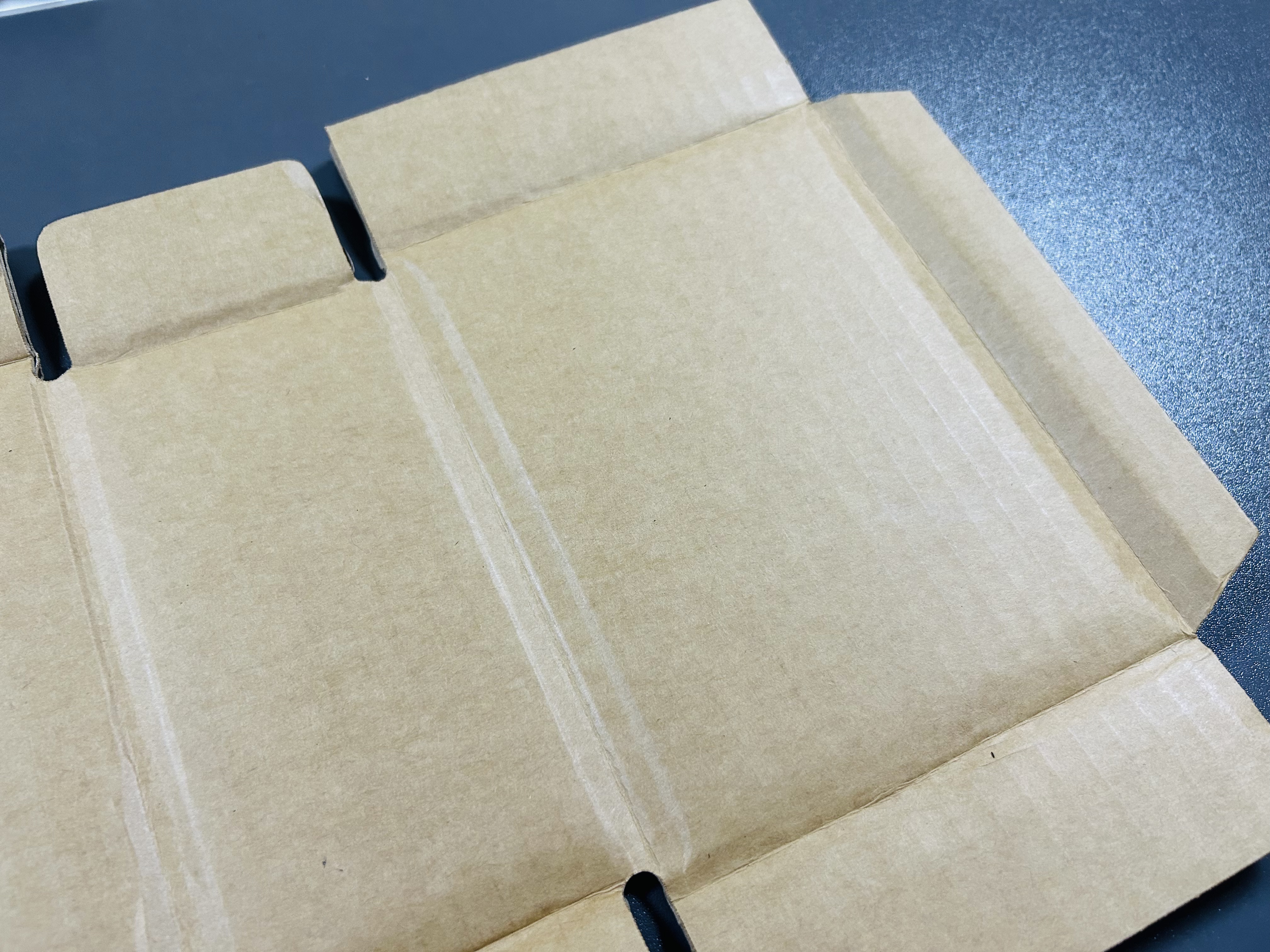
Above: Honeycomb board with clean crease lines produced by ZCCUTTER vibration knife. The dual-wheel destructive creasing process creates foldable lines without crushing the hexagonal core structure.
The Three Operations Honeycomb Board Actually Needs
| Operation | Suitable Thickness | Tool |
|---|---|---|
| Half-cut (kiss cut) | Full thickness range | Depth-controlled vibration knife |
| Dual-wheel destructive creasing | ≤10mm | Wide pressure wheel (pre-press) + fine pointed wheel (finishing) |
| V-groove cutting | >10mm | V-groove knife |
Half-cutting and grey board half-cutting follow the same logic — cut only the top paper, not the core, not the bottom paper — used for single-sheet forming structures. ZCCUTTER has been doing this for years; the process is mature.
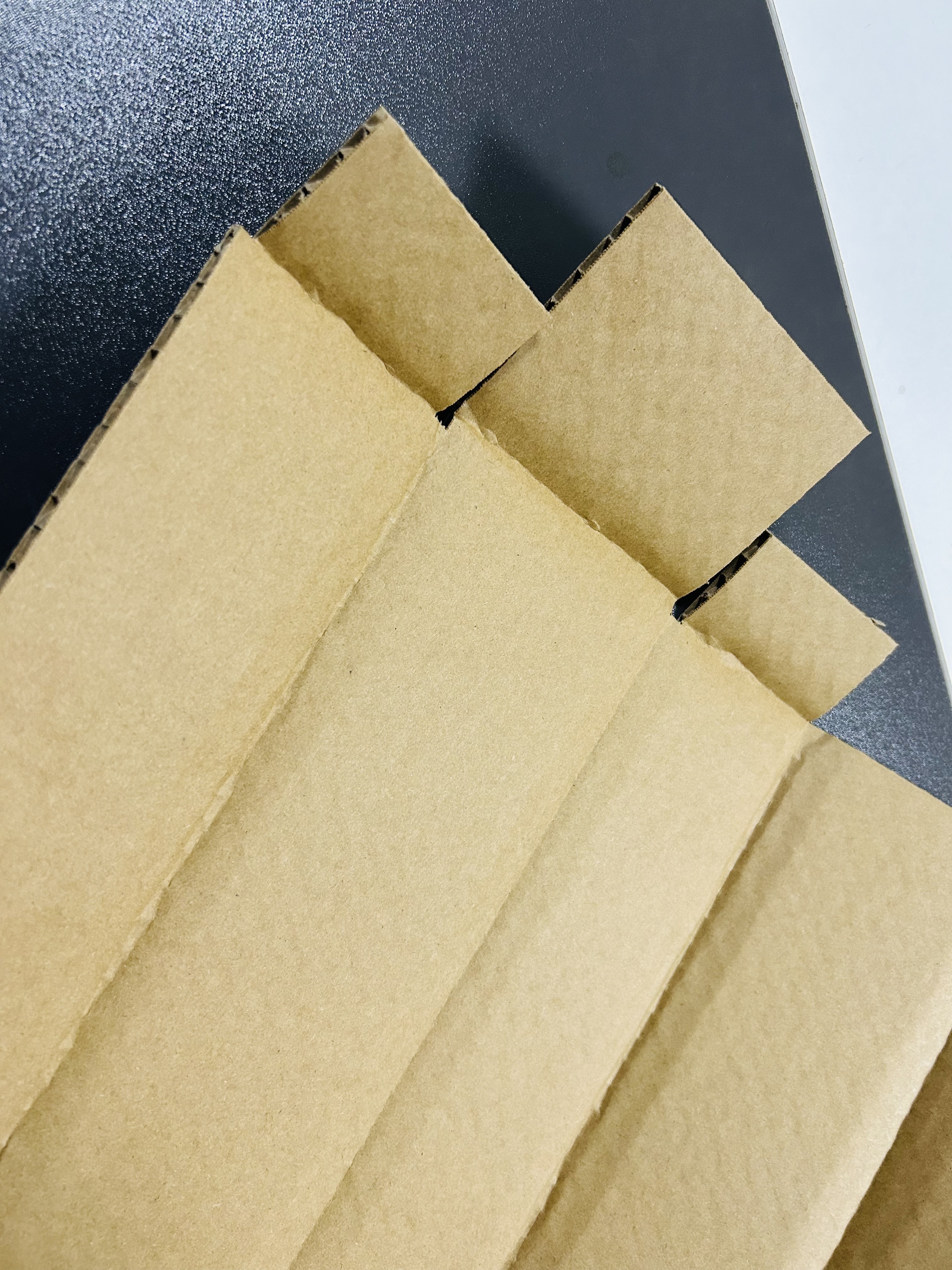
Above: Close-up of honeycomb board half-cut and crease detail. The vibration knife cuts only the top liner while leaving the hexagonal core intact, enabling clean folding without structural damage.
Why Dual-Wheel Creasing Is "Destructive"
Honeycomb core cannot be gently creased — gentle pressure won't create a fold line. To crease it, you must "destroy first, then set the shape":
First pass: Wide pressure wheel pre-press. The wide wheel has a large contact area. It locally crushes the honeycomb core to form a fold-direction groove. This step is not "creasing" — it's "pressing out a foldable weak zone."
Second pass: Fine pointed wheel finishing. The fine pointed wheel presses along the pre-pressed groove again, sharpening the crease. Working together, boards under 10mm can achieve folding results close to corrugated board.
What about over 10mm? The core is too thick — even dual-wheel pressure can't penetrate fully, and the fold will crack. In this case, go straight to V-groove cutting: remove part of the core material at the fold angle, and the remaining top paper bends naturally.
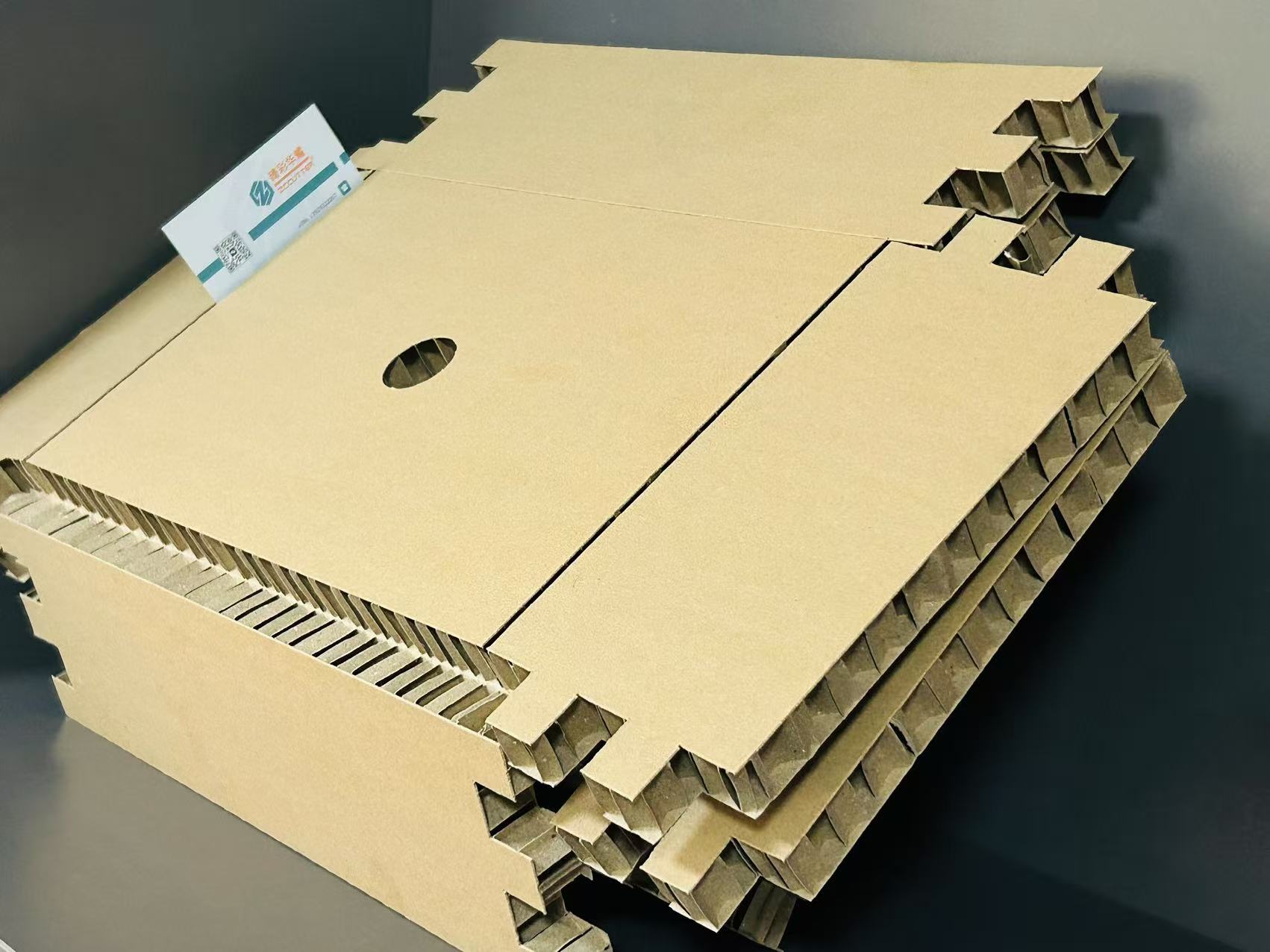
Above: Honeycomb board half-cut sample showing a single-piece forming structure. The vibration knife precisely cuts the top liner while preserving the hexagonal core, allowing the board to fold into a 3D shape without additional assembly.
What Drives the Precision
Honeycomb density is not perfectly uniform across a single board. A fixed knife pressure will cut through soft zones but fail to penetrate dense zones.
ZCCUTTER's dual closed-loop Z-axis depth control system adjusts cut depth in real time based on resistance. Combined with multi-zone negative pressure suction, small parts stay in place even when the board is fully populated.
Half-cut depth control is especially critical — a 0.1mm difference in cut depth can either cut through the bottom paper or fail to cut the top paper. The AI1500 process library stores half-cut parameters for different honeycomb thicknesses, so operators don't start from scratch every time.
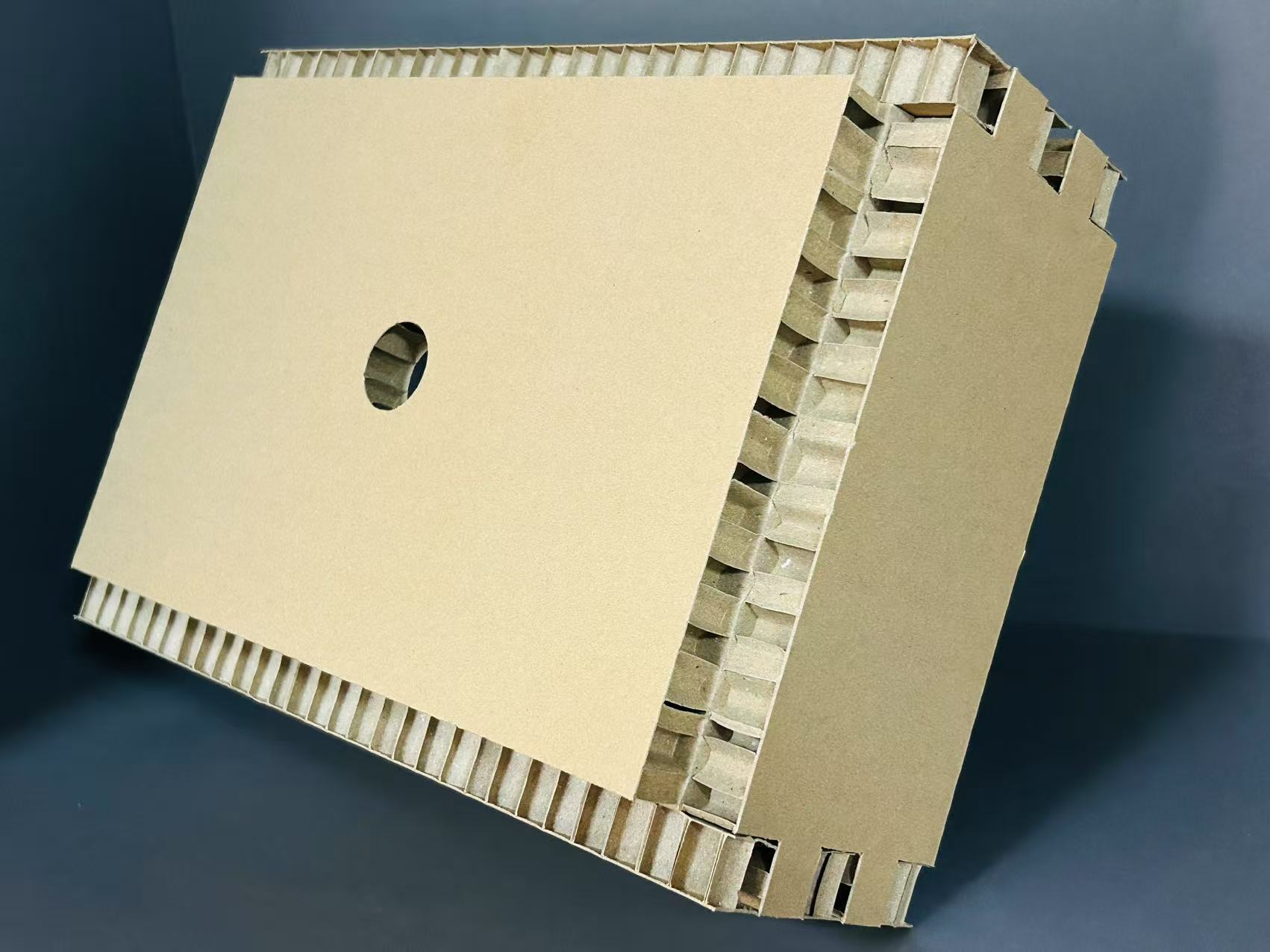
Above: Honeycomb board half-cut sample from another angle, demonstrating the fold capability. The clean cut edges and intact core structure show the precision of the depth-controlled vibration knife system.
Reference Configuration
| Parameter | Specification |
|---|---|
| Working area | 1600×2500mm (customizable up to 4500×2500mm) |
| Material thickness | Honeycomb board 5–60mm; full machine covers 0–150mm flexible materials |
| Repeatability precision | ±0.1mm |
| Knife head configuration | Single / Dual / Four-knife optional |
| Creasing module | Dual pressure wheels (wide pre-press + fine finishing), suitable for ≤10mm |
| V-groove module | Dedicated for thick material folding |
| Vision system | 20MP four-point CCD (print registration) |
| File formats | DXF, AI, PDF, PLT, HP-GL |
Pre-Purchase Checklist
- What is your honeycomb thickness? ≤10mm can use dual-wheel creasing; >10mm must use V-groove.
- Do you need half-cut forming or creasing for folding? Half-cutting is ZCCUTTER's mature strength; creasing depends on thickness boundaries.
- How many fold lines per board? If you change jobs more than 10 times per day, digital cutting is more flexible than a scoring machine.
- High volume with fixed shapes? Consider a professional scoring machine directly — don't force a cutter to do a job it's not optimized for.
We have physical samples and comparison photos available — half-cut, dual-wheel creasing, and V-groove results for 5mm, 10mm, and 20mm honeycomb board. Welcome to see them in person.
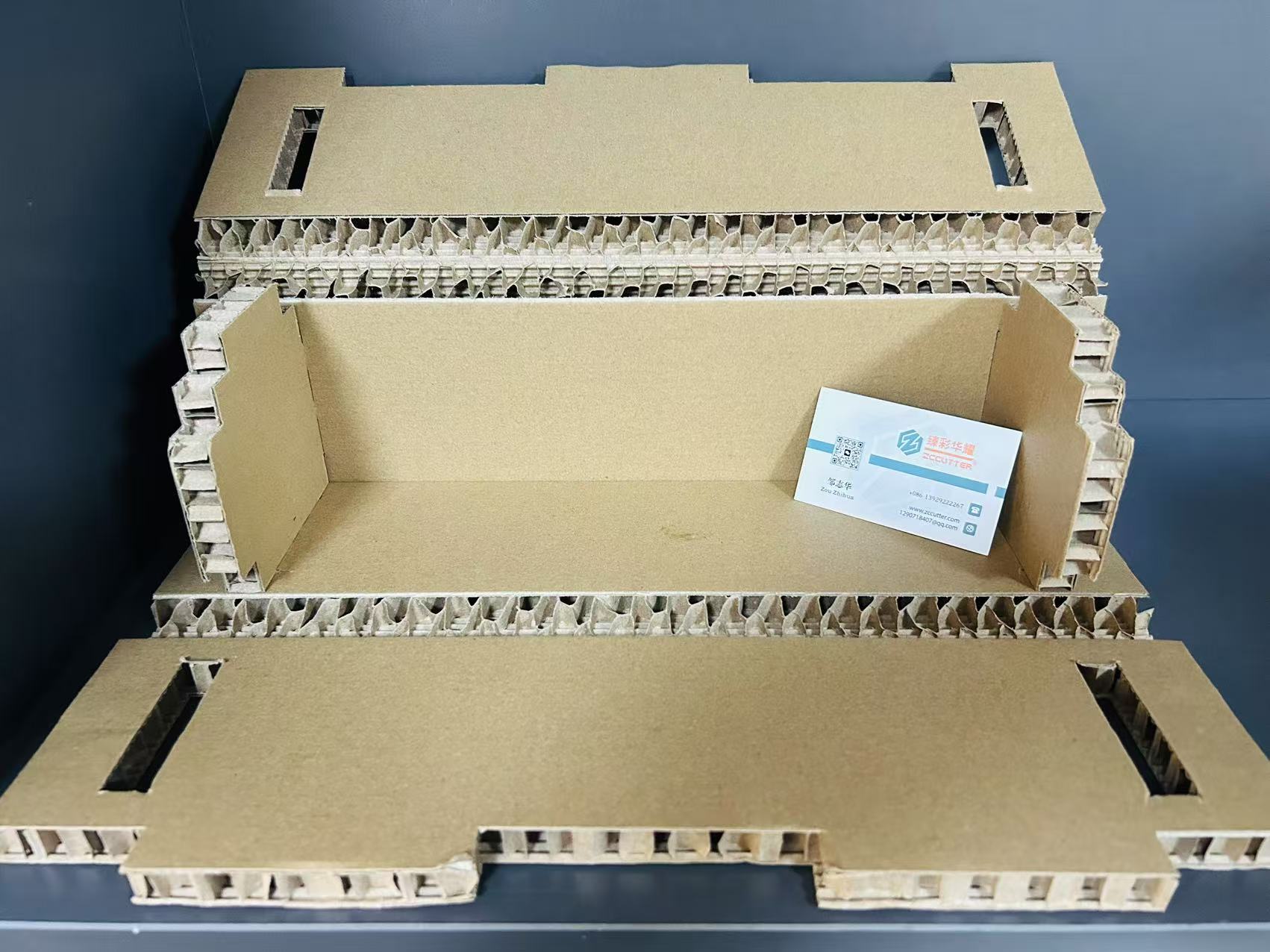
Above: Honeycomb gift box produced with ZCCUTTER vibration knife half-cut and crease process. The complex fold lines and clean edges demonstrate the capability of the dual-wheel destructive creasing system for boards under 10mm.
Being Clear About What We Promise
ZCCUTTER does not promise "honeycomb board can be creased however you want." What we do promise:
- Half-cut single-sheet forming — mature process shared with grey board technology
- Dual-wheel destructive creasing for boards ≤10mm — wide wheel first, then fine wheel; folds without cracking
- V-groove cutting for boards >10mm — don't force pressure; solve structural problems with structure
The difficulty with honeycomb board isn't "cutting" — it's "forming after cutting." We solve this layer by layer, by thickness. No blanket promises, no claims of universal capability.