
The Invisible Technology Behind China's EV Revolution: Flexible Material Digital Cutting
Trusted by 6,000+ customers worldwide
The Invisible Technology Behind China's EV Revolution: Flexible Material Digital Cutting
What China's EV Startups Changed
Over the past decade, the global automotive industry has undergone a fundamental transformation.
The powertrain changed — from combustion to electric.
The product definition changed — from mechanical to intelligent.
The supply chain logic changed — from high-volume, long-cycle, low-variety to low-volume, fast-iteration, high-variety.
Amid this transformation, a long-overlooked component has emerged: flexible materials.
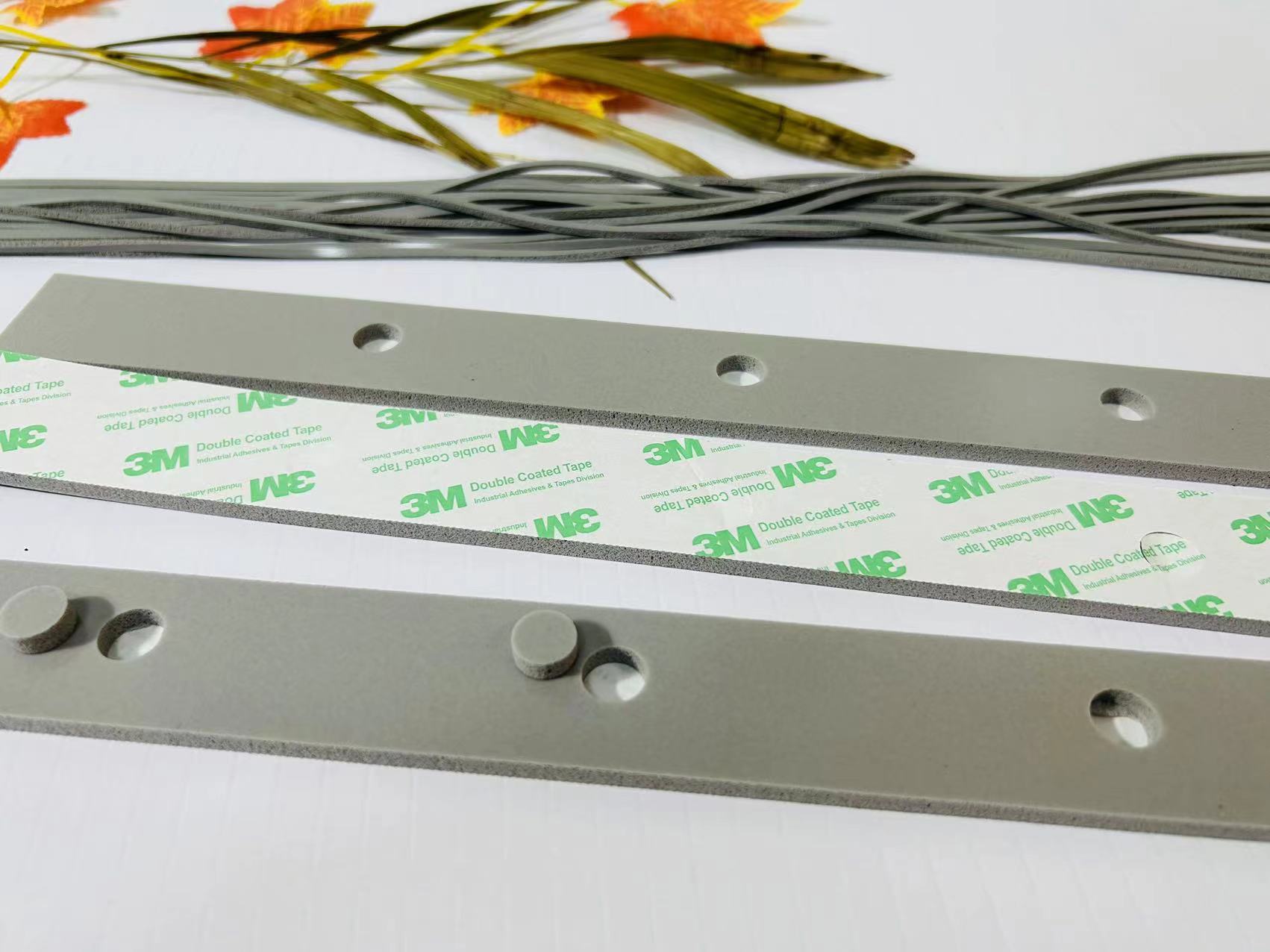
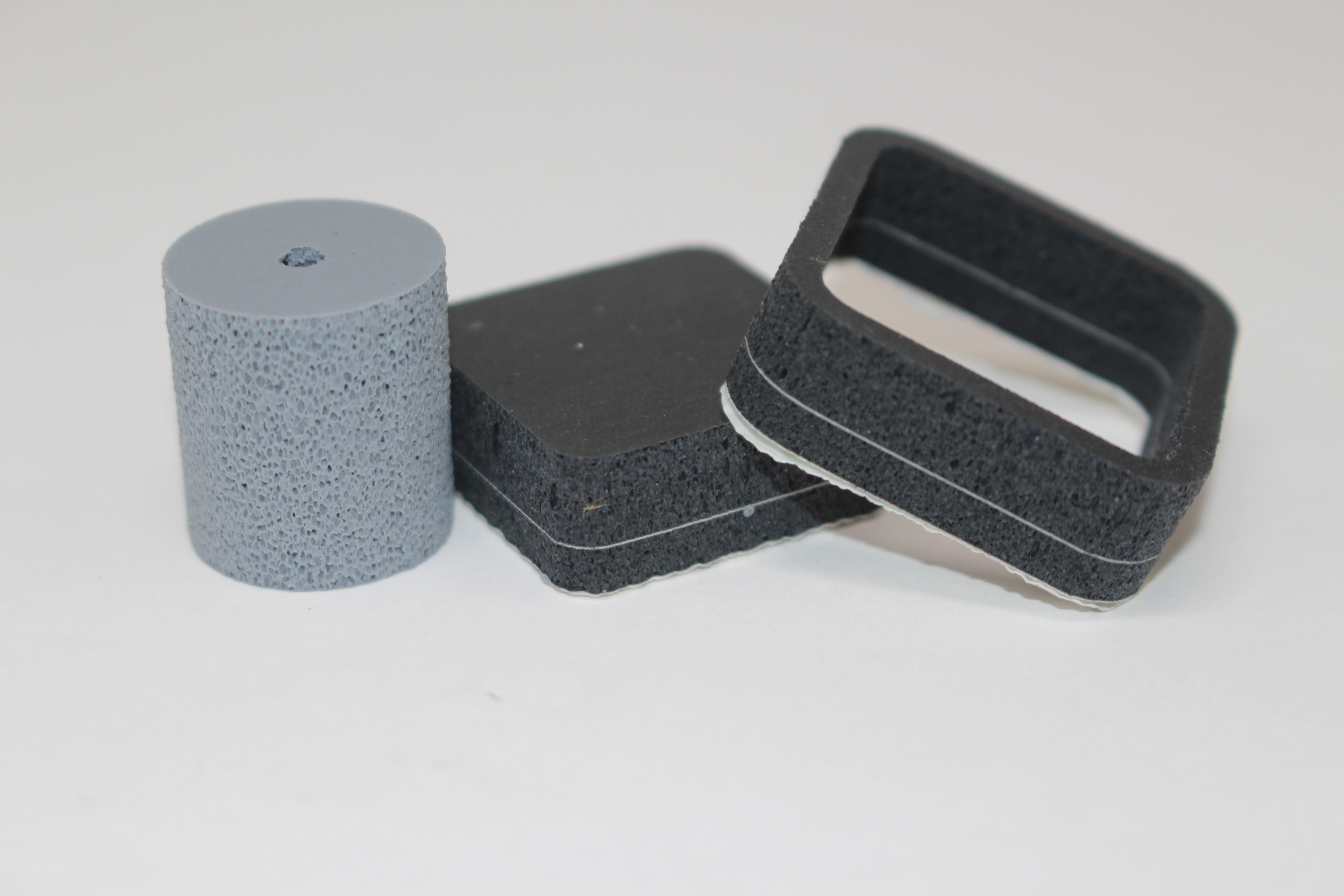
Before every electric vehicle rolls off the production line, it requires hundreds of non-metallic flexible materials — sealing gaskets, vibration-damping foam, acoustic insulation mats, interior trim pads, battery module buffer pads, thermal management conductive pads, insulation sheets. These materials don't determine a car's acceleration performance, but they determine its quietness, safety, range, and durability.
And traditional die-cutting is becoming the bottleneck constraining these material supplies.
The Limits of Traditional Die-Cutting
Traditional die-cutting requires a dedicated steel rule die for every single part. This process was efficient in the era of high-volume, low-variety production. But faced with the supply chain demands of EV startups, it exposes three structural defects:
| Challenge | Traditional Die-Cutting | Supply Chain Impact |
|---|---|---|
| Fast model iteration | New die required for each redesign | Long cycles, high costs, slow response |
| Small batch sizes | Die amortization cost remains high | Small orders uneconomical |
| Complex shapes | Irregular curves and cutouts difficult | Design constrained, revisions costly |
EV startups' supply chains need a new solution: die-less, zero tooling cost, economical even at single-piece quantities.
That solution is flexible material digital cutting.
ZCCUTTER: The Technology Provider
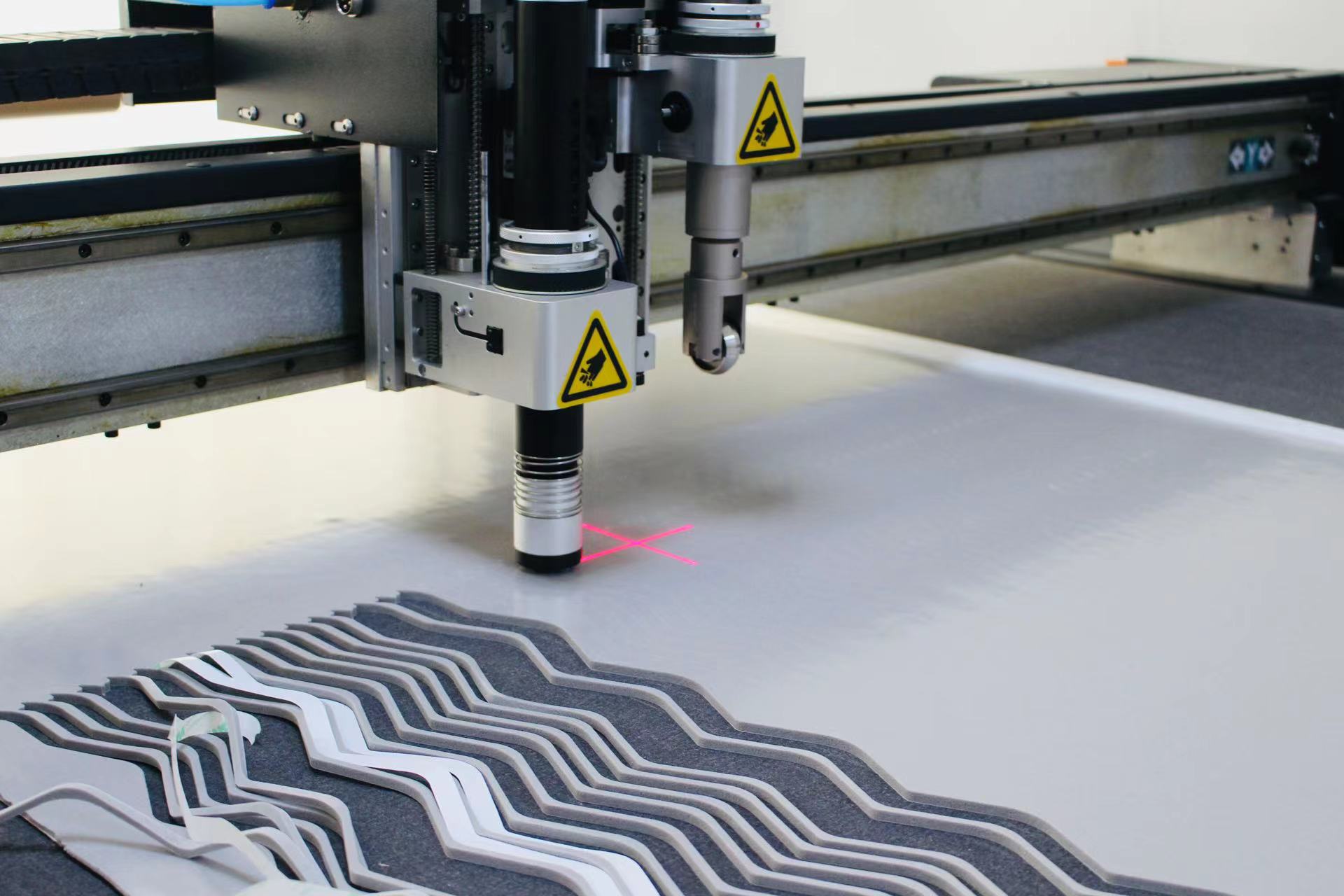
ZCCUTTER's digital cutting equipment is designed precisely to solve these problems.
- No dies required: Design files imported directly, cutting paths generated instantly
- Zero tooling cost: Model changes only require CAD file updates, no additional expense
- Small-batch economical: Cost per piece nearly identical whether cutting 1 or 1,000 units
- Wide material compatibility: Process database covers 1,500+ materials including foam, rubber, felt, nonwoven, composites, thermal conductive materials
This is not laboratory technology. It has been validated and adopted in real automotive supply chains.
Who Is Using This Technology
Take the EV battery supply chain as an example.
Dongheng Group is a key supplier to CATL (Contemporary Amperex Technology), processing buffer, insulation, and thermal insulation flexible materials for battery modules.
Before adopting ZCCUTTER, Dongheng used large-format traditional die-cutting equipment. This solution worked for single-model, high-volume scenarios. But as EV models iterated rapidly, problems emerged:
- Many models, many variants: Battery pack structures change with each generation, requiring constant material shape adjustments
- High die-cutting costs: Every new shape requires a new steel rule die — high upfront investment, long lead times
- Slow response: From design change to first-part delivery, often bottlenecked by die fabrication cycles
After switching to ZCCUTTER digital cutting, the problems were structurally resolved:
- Instant changeover: Import design file, start cutting immediately — no waiting for dies
- Single-piece viable: Prototyping, small batches, urgent orders all accepted — unit cost unaffected by volume
- Zero die cost: Model redesign only requires CAD file update — equipment never stops
This is not a 30% efficiency improvement. It is a fundamental shift in production method — from "invest in tooling first, then produce" to "have a drawing, have a physical part."
In the automotive and new energy flexible material supply chain, Dongheng Group is not an isolated case.
| Customer | Role in Supply Chain | Materials Cut |
|---|---|---|
| Dongheng Group | Key CATL supplier | Battery module buffer, insulation, thermal materials |
| Xiangyuan Co. | Power battery sealing supplier | Silicone foam, sealing gaskets |
| Tianyi New Materials | New energy buffer supplier | Specialty foam, composite insulation |
| Aochuan New Materials | Thermal management supplier | Thermal pads, conductive foam |
| Weili Rubber & Plastic | Rubber components supplier | Rubber seals, vibration dampers |
| Jing'an New Materials | Automotive electronics precision | Sensor pads, electronic insulation |
Additionally, ZCCUTTER equipment is widely used in 3C electronics and optical film applications. The precision requirements and material complexity in these fields closely overlap with automotive components, allowing process parameters and expertise to transfer directly.
These customers collectively validate one thing: ZCCUTTER is not replacing a single machine — it is replacing an entire "tool-die-wait-produce" legacy process.
China's Auto Manufacturing Goes Global, ZCCUTTER Must Too
Over the past two decades, China's automotive industry has transformed from "bringing in" to "going out."
Today, BYD, Geely, Chery, NIO, and XPeng export vehicles to Europe, Southeast Asia, Latin America, and the Middle East. Chinese battery companies and component suppliers are building factories overseas, providing local support. Global brands like BMW, Tesla, and Volkswagen have deeply embedded their Chinese supply chains into local flexible material processing capabilities.
This means one thing: China's automotive manufacturing technology standards are becoming part of global automotive manufacturing.
As the flexible material digital cutting technology provider in this supply chain, ZCCUTTER has no reason to stay only in China.
Our customers are going global. Our customers' Chinese suppliers are being adopted by global automakers. Therefore, ZCCUTTER's service scope naturally expands from "suppliers to Chinese automakers" to "suppliers to global automakers."
It's not that we're going to capture markets. The markets have followed China's automotive footprint to our doorstep.
From Serving China to Serving the World
The cardboard Jeep project let the world see the ZCCUTTER name.
But names get forgotten. Capabilities get remembered.
Over the past 17 years, ZCCUTTER has served core suppliers in China's automotive and new energy industrial chains — from battery module buffer pads to vehicle assembly interior trim, from 3C electronics precision foam to optical film high-precision cutting.
These customers' demands for precision, batch consistency, and rapid new-model response have pushed ZCCUTTER to build a 1,500+ material process database, achieve 72-hour continuous operation without drift, and develop engineering capabilities to "customer provides drawing, we deliver sample."
Today, these capabilities are mature.
The next step is letting the global automotive manufacturing supply chain use the same technology.
Not because we want to grow big, but because the globalization of EV startups fundamentally requires a new flexible material cutting method — die-less, instant changeover, single-piece viable, globally reproducible.
ZCCUTTER provides exactly this method.
Conclusion
EV startups have changed the landscape of the global automotive industry. But regardless of how the powertrain changes, whether the brand is BMW or Tesla, a car still needs sealing gaskets, vibration-damping foam, acoustic insulation, battery buffer pads — these flexible materials.
ZCCUTTER is not a car maker. We are the provider of an indispensable technology behind EV startups: flexible material digital cutting.
We have validated this technology in China's automotive supply chain.
Now, we bring it to the world.