

How to Cut Wet PVA Sponge and Dry Polyester Plush: A Workshop Test Log on Cold-Cutting Processes for Flexible Materials
Trusted by 6,000+ customers worldwide
How to Cut Wet PVA Sponge and Dry Polyester Plush: A Workshop Test Log on Cold-Cutting Processes for Flexible Materials
One-Sentence Conclusion
There is no universal knife for flexible materials — only matched processes. Wet PVA requires high-frequency vibration knife cold cutting; dry polyester plush requires rotary knife cutting from the reverse side. Change the tool, change the cutting surface — the results are worlds apart.
I. Two Materials, Two Completely Opposite Physical Properties
| Dimension | Material A: Wet PVA Absorbent Sponge | Material B: Dry Polyester Plush |
|---|---|---|
| Material Category | Hydrophilic polymer foam | Chemical fiber knitted plush fabric |
| Moisture State | Saturated moisture (60-80% water content) | Dry |
| Structural Characteristics | Open-cell foam structure, pore size 0.1-0.5mm | Dual-layer structure: woven base fabric + upright plush fibers |
| Hardness Range | Shore A 15-30 (softened when wet) | Base fabric Shore A 50-70, plush has no hardness |
| Heat Sensitivity | Extremely high: begins to soften and deform above 80°C | Moderate: melts above 150°C |
| Cutting Difficulty | Fears thermal charring, fears crushing cells | Fears impact flash, fears front-cutting fiber pull-out |
| Quality Standard | Clean cut, no lint, intact cells | Neat edges, plush not flattened, no fiber shedding by hand |
Both are flexible materials, but one needs to preserve cells, the other needs to preserve plush. The process approach is completely reversed.
II. Test Process: Four Process Combinations, All Documented
The customer requested validation of three variables: pneumatic gun, rotary knife, and cutting surface selection. We followed ZC-FILE-001 test archive standards — each group was cut, photographed, videoed, sampled, and accompanied by parameter cards.
Test Group A: Wet PVA Sponge — High-Frequency Vibration Knife Cold Cutting (Recommended Solution)
| Parameter | Setting |
|---|---|
| Tool Type | High-frequency vibration knife (serrated blade) |
| Blade Specification | Tooth pitch 2.5mm, edge angle 25° |
| Vibration Frequency | 100 Hz |
| Amplitude | 2.5 mm |
| Cutting Speed | 300 mm/s |
| Cutting Depth | Material thickness + 0.5 mm |
| Vacuum Suction | Low setting (to prevent foam collapse) |
| Cutting Surface | Front side |
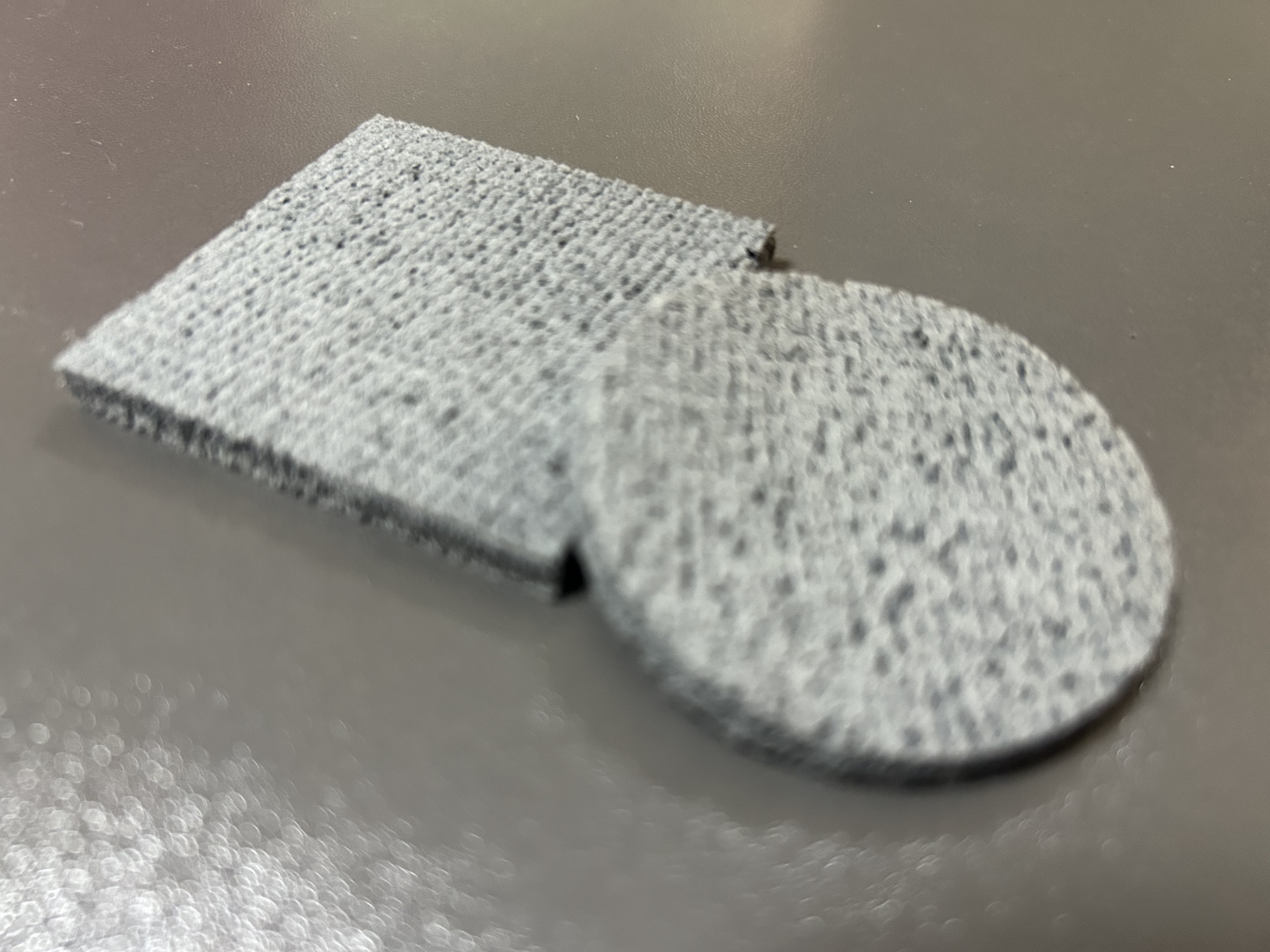
Result: Cut is smooth, no lint, no yellowing, cell structure intact.
Mechanism Explanation: PVA contains water and is porous. Laser thermal processing would cause instant water vaporization and cell wall melting/collapse, leading to surface charring, hardening, and closed-cell failure. High-frequency vibration cold cutting maintains no temperature rise throughout — the blade relies on mechanical shearing force to cut cell walls, preserving the material's water absorption and elasticity.
Video 1: Complete process of PVA sponge vibration knife cold cutting. No thermal damage throughout, cell structure fully preserved.
Figure 1: PVA sponge vibration knife cold cutting finished product. Cut is smooth, cell structure intact, no charring, no lint.
Test Group B: Dry Polyester Plush — Pneumatic Gun Front-Side Processing (Control Group, Failed)
| Parameter | Setting |
|---|---|
| Tool Type | Pneumatic gun |
| Drive Method | Compressed air, piston reciprocating |
| Vibration Frequency | 30 Hz |
| Amplitude | 8 mm |
| Impact Peak Force | Approximately 60 N |
| Cutting Speed | 200 mm/s |
| Cutting Surface | Plush front side |
Result: Circular hole edges severely flashed, fiber shedding, plush surface exploded.
Failure Analysis: The pneumatic gun's large amplitude (8mm) impact acts on the upright plush fiber bundles. Due to the lack of lateral weaving constraints on the plush fibers, the impact force pulls out fibers rather than cutting them, forming a large number of free short fibers. This process is not suitable for fluffy textile materials.
Video 2: Polyester plush pneumatic gun front-side processing — severe flashing, fiber shedding, plush surface exploded. This process is not suitable for fluffy textile materials.
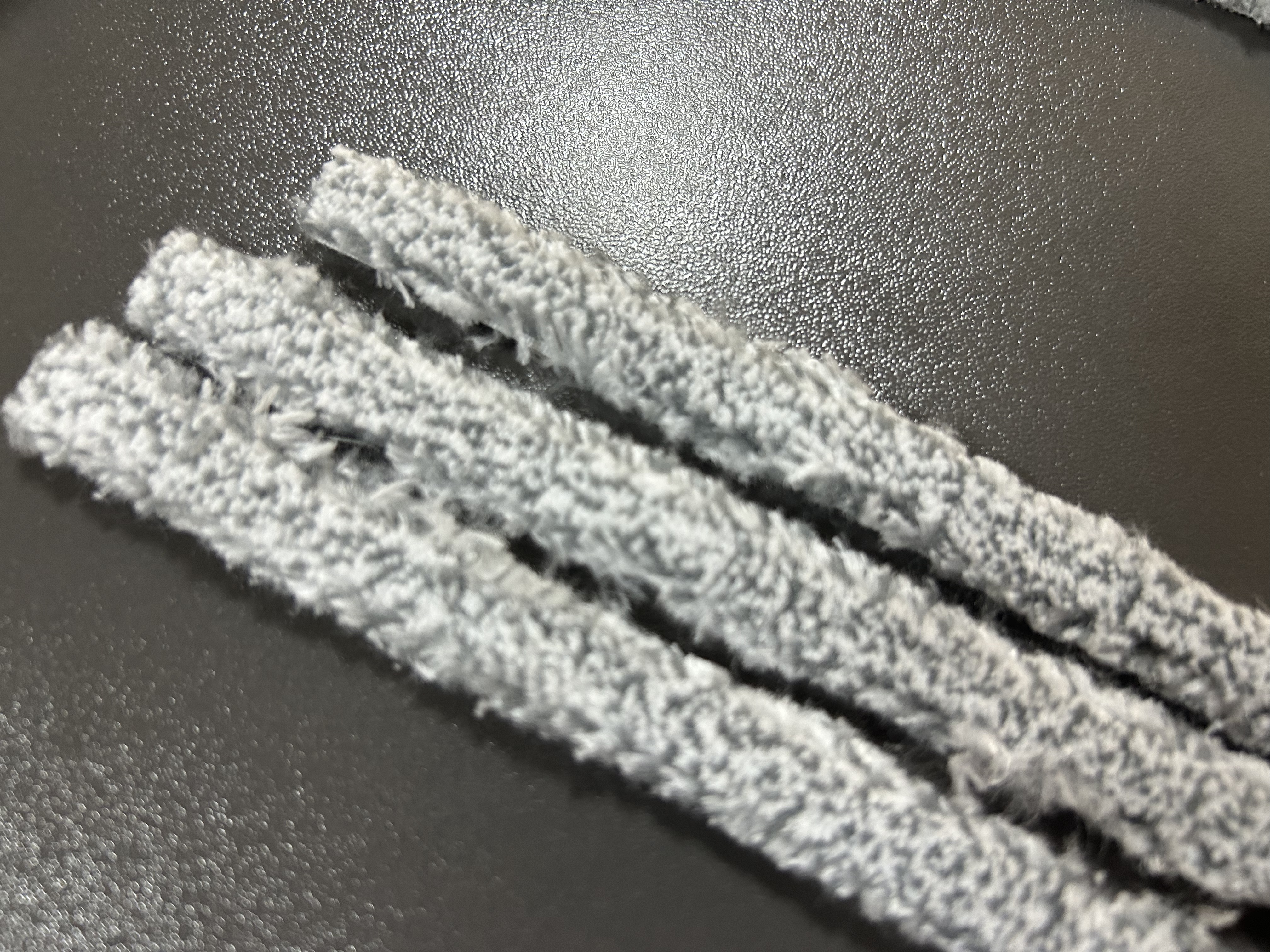
Figure 2: Polyester plush pneumatic gun front-side processing failed sample. Edges severely flashed, plush fibers pulled out rather than cut.
Test Group C: Dry Polyester Plush — Rotary Knife Front-Side Processing (Transitional Solution)
| Parameter | Setting |
|---|---|
| Tool Type | Rotary knife |
| Blade Diameter | 30 mm |
| Blade Speed | 4500 rpm |
| Cutting Speed | 300 mm/s |
| Cutting Depth | Material thickness + 0.3 mm |
| Vacuum Suction | Not required |
| Cutting Surface | Plush front side |
Result: Significantly improved compared to pneumatic gun, but still has slight flashing.
Mechanism Explanation: The rotary knife's rolling shear mode (continuous shear force approximately 10N) is far superior to the pneumatic gun's impact splitting mode. However, when the tool cuts from the plush surface, it still pulls on the surface upright fibers, causing some fibers to break unevenly.
Video 3: Polyester plush rotary knife front-side processing — significantly improved compared to pneumatic gun, but still has slight flashing.
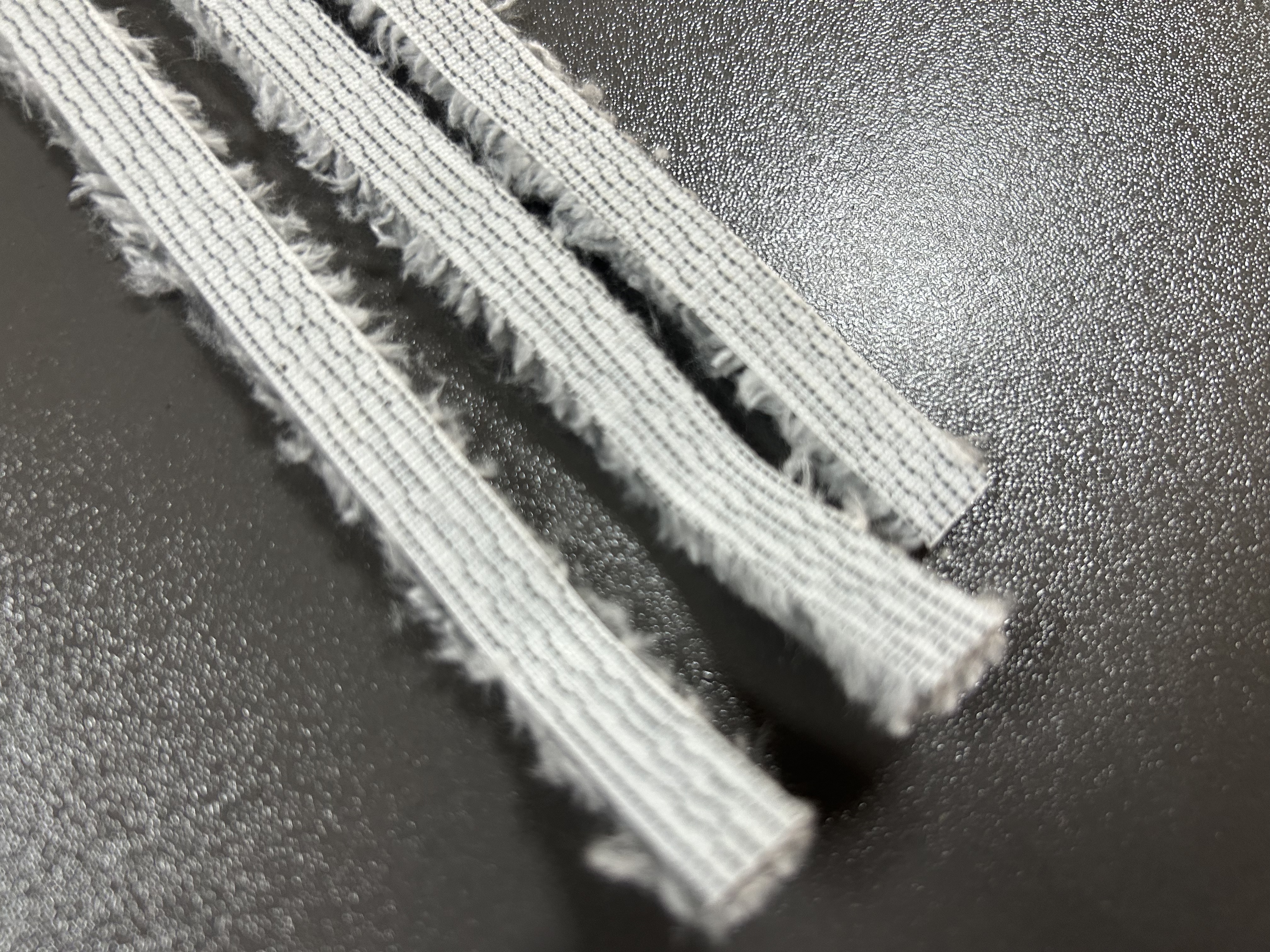
Figure 3: Polyester plush rotary knife front-side processing effect. Significantly improved compared to pneumatic gun, but still has slight flashing.
Test Group D: Dry Polyester Plush — Rotary Knife Reverse-Side Processing (Recommended Solution, Optimal)
| Parameter | Setting |
|---|---|
| Tool Type | Rotary knife |
| Blade Diameter | 30 mm |
| Blade Speed | 4500 rpm |
| Cutting Speed | 350 mm/s |
| Cutting Depth | Material thickness + 0.3 mm |
| Vacuum Suction | Not required |
| Cutting Surface | Reverse side (base fabric side) |
| Layout Direction | Follow weaving direction |
Result: Edges neat, no fiber shedding, plush surface intact and fluffy. Optimal solution for this test.
Video 4: Polyester plush rotary knife reverse-side processing — edges neat, no fiber shedding, plush surface intact and fluffy. Optimal solution for this test.
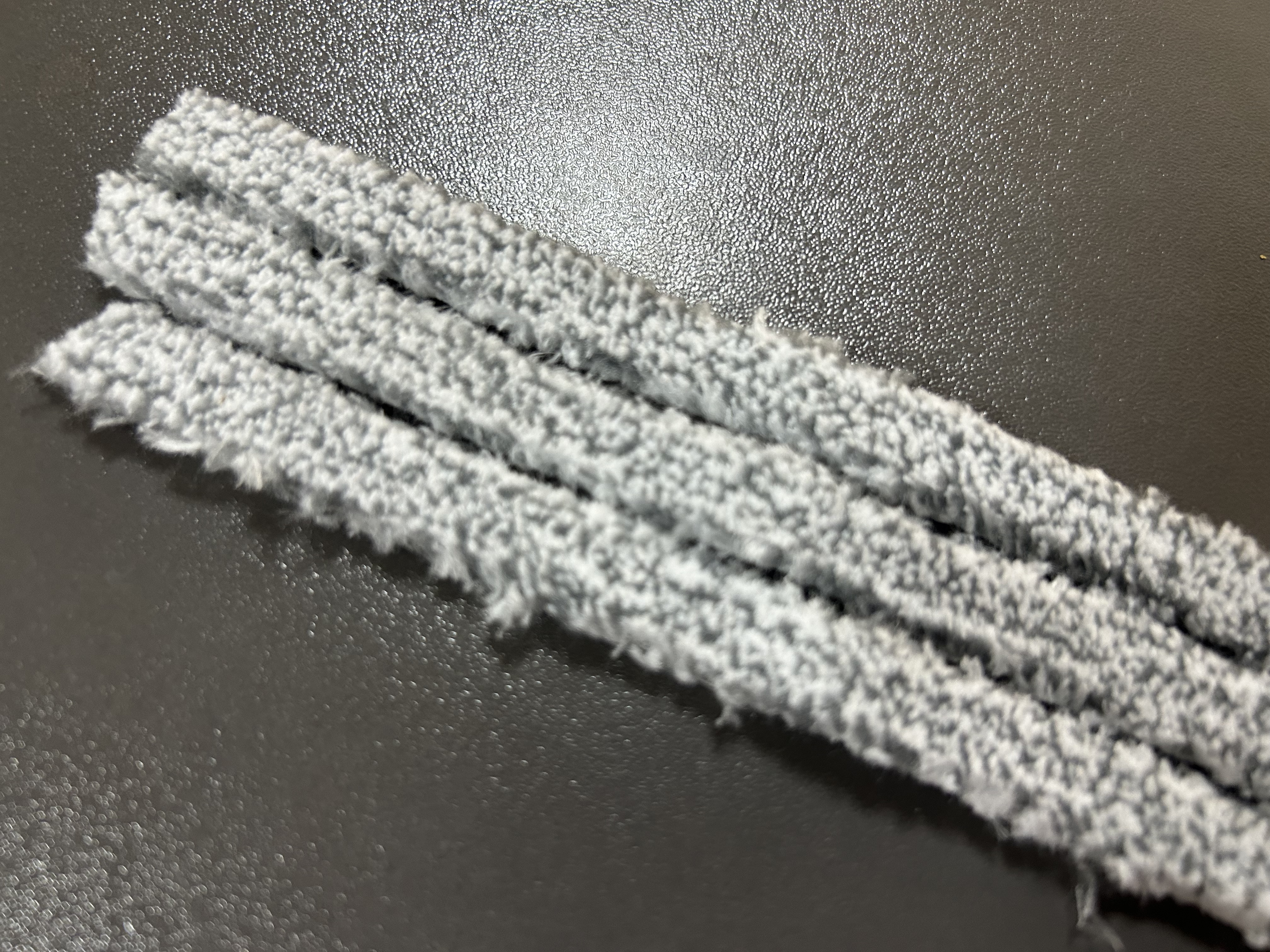
Figure 4: Polyester plush rotary knife reverse-side processing effect. Edges neat, plush surface intact and fluffy, optimal solution for this test.
Engineering Principle: Polyester plush is a typical dual-layer composite structure of plush/base fabric — the base fabric layer has warp and weft weaving density of 80-120 threads/inch, yarn interweaving is tight, tensile strength is high; the plush layer has fibers arranged vertically, single filament denier 75-150D, weak lateral constraints. When cutting from the front, the tool first contacts the plush fiber bundles; fibers lack lateral constraints and are pulled out rather than cut, forming flashing. When cutting from the reverse side, the tool cuts from the base fabric side; the base fabric weaving structure provides lateral constraint force for the fibers, the blade first cuts the warp and weft yarns, then cuts the plush fibers from bottom to top, plush fibers are neatly cut at the root, no pull-out failure occurs.
III. Pneumatic Gun vs. Rotary Knife: Quantitative Comparison of Cutting Mechanisms
| Dimension | Pneumatic Gun | Rotary Knife |
|---|---|---|
| Drive Method | Compressed air drives piston reciprocating | Servo motor drives blade rotation |
| Vibration Frequency | 20-40 Hz | No vertical vibration, blade speed 3000-6000 rpm |
| Single Stroke (Amplitude) | 5-12 mm (adjustable) | <0.1 mm (blade radial runout) |
| Cutting Force Peak | Impact peak force 50-80 N | Continuous shear force 5-15 N |
| Action on Material | Impact splitting, material locally instantaneously compressed | Rolling shear, blade edge continuously separates fibers along cutting line |
| Suitable Material Hardness | Shore A 20-80 | Shore A 10-60 |
| Breathable Fabric Compatibility | ❌ Requires vacuum suction, breathable fabrics cannot be held | ✅ No suction needed, blade rolling presses material to conform |
| Plush Material Cutting Effect | ❌ Flashing, fiber shedding, plush explosion | ✅ Clean cut, preserves plush integrity |
An Intuitive Analogy: Pneumatic gun ≈ using a hammer to smash through a rope (the rope will fray); Rotary knife ≈ using scissors to cut through a rope (the cross-section is neat). For breathable textile materials like polyester plush, the rotary knife's rolling shear mode is naturally compatible.
IV. Process Selection Decision Tree
What is the customer's material?
- Wet PVA sponge (moist, porous) → Recommended: High-frequency vibration knife cold cutting. Reason: Avoid thermal damage, maintain cell structure. Parameters: Amplitude 2-3mm, frequency 80-120Hz, speed 200-400mm/s.
- Dry polyester plush (chemical fiber woven) → If there is grain direction, layout follows grain; if no grain direction, any layout is acceptable. Select reverse side (base fabric side) for cutting surface, select rotary knife for tool. Parameters: Speed 4000-5000rpm, feed speed 200-400mm/s.
V. Technical Parameter Quick Reference Table
| Parameter | PVA Sponge (Wet) | Polyester Plush (Reverse-Side Processing) |
|---|---|---|
| Recommended Tool | High-frequency vibration knife | Rotary knife |
| Blade Specification | Serrated blade, tooth pitch 2-3mm | Round blade diameter 28-32mm |
| Spindle Speed | Not applicable | 4000-5000 rpm |
| Cutting Speed | 200-400 mm/s | 200-400 mm/s |
| Cutting Depth | Material thickness + 0.5mm | Material thickness + 0.3mm |
| Vacuum Suction | Required (low setting, to prevent foam collapse) | Not required |
| Cutting Surface | Front side | Reverse side (base fabric side) |
| Grain Direction Requirement | None | Required |
| Expected Precision | ±0.5mm | ±0.5mm |
| Edge Quality Rating | ✅ Qualified | ✅ Qualified |
VI. Why We Also Send Back Failed Samples to Customers
In the sample kit sent back this time, there are beautifully cut pieces (Groups A, D), and also deliberately poorly cut pieces (Groups B, C).
Not to prove how great we are, but to let customers see for themselves, touch for themselves, and judge for themselves: which cut surface best matches their on-site process, which effect their downstream customers can accept, which process their operators can replicate.
We provide data, not conclusions. Customers draw their own conclusions.
This is also ZCCUTTER's basic attitude towards process archives: Don't beautify the process, don't hide failures. Every cannot cut is a brick in the boundary of the process.
VII. From One Test to 1500 Process Assets
This test has been deposited as two ZC-FILE-001 test archives, entering the AI1500 Material Process Library:
- ZC-PROCESS-PVA-001: Wet PVA Sponge Cold Cutting Process
- ZC-PROCESS-POLYESTER-001: Dry Polyester Plush Reverse-Side Rotary Knife Process
Each archive includes: Material properties (name, thickness, moisture content, weaving density, grain direction), Tool parameters (type, specification, speed/frequency, amplitude), Process parameters (cutting speed, cutting depth, vacuum suction setting, cutting surface), Effect rating (cross-section micrograph, precision measurement, edge quality), Application boundaries (under what conditions it can be used, under what conditions it cannot).
AI1500 was not built in a day. It is built bit by bit from every test, every sample, every photo, every video.
VIII. If You Also Have Materials That Cannot Be Cut Well
Send them over. If we can cut it, we'll give you the parameters. If we can't cut it, we'll tell you which path doesn't work, saving you three weeks of trial and error.
We don't promise universality, we only promise authenticity.