

Why Packaging Structural Design Fails at Prototyping — And How Digital Cold Cutting Changes the Game
全球近6000家客户的共同选择
Why Packaging Structural Design Fails at Prototyping — And How Digital Cold Cutting Changes the Game
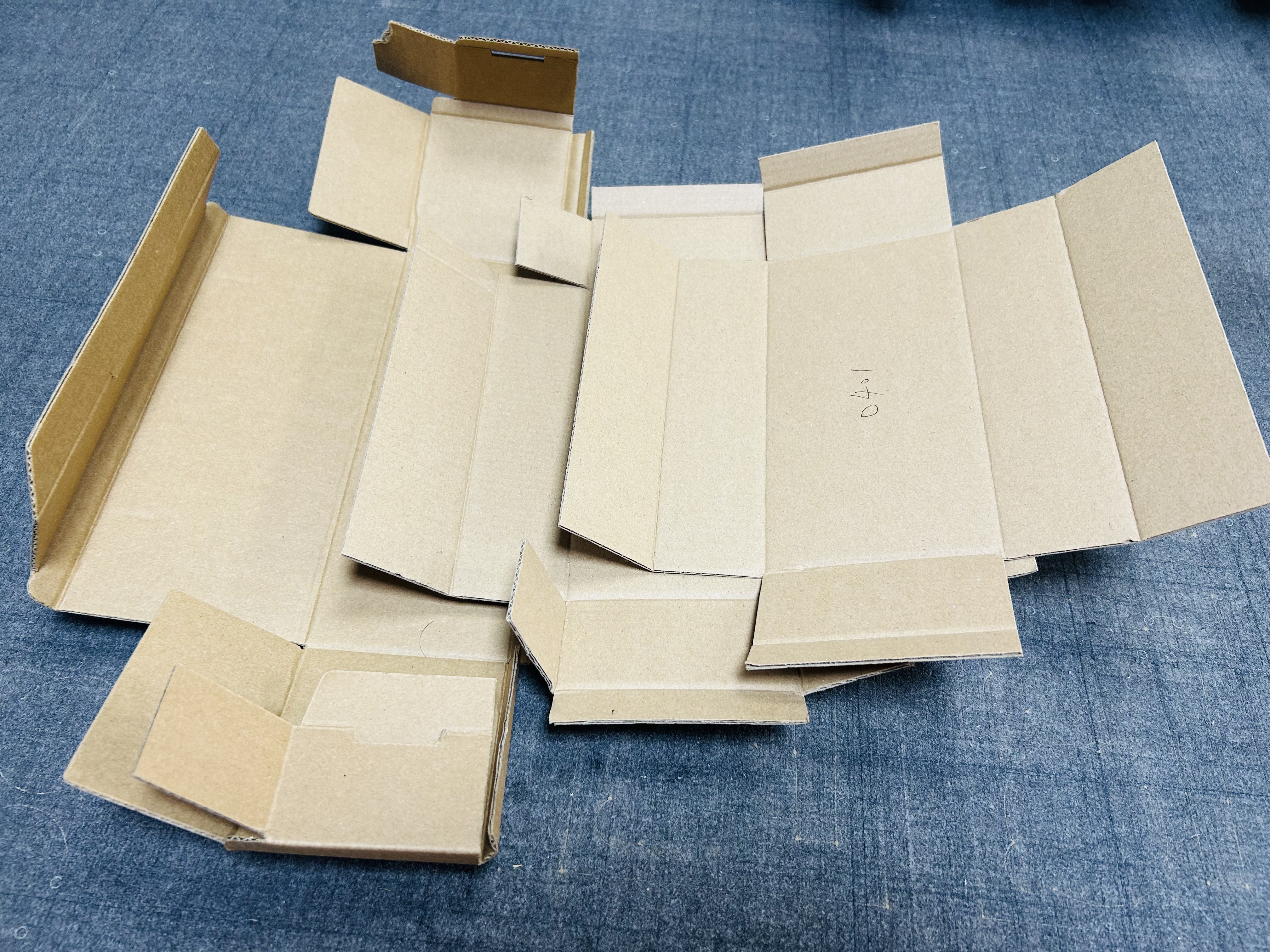
Your 3D Model Is Perfect. The Sample Is Not.
Your 3D model is perfect. The structure interlocks cleanly. Material specs are clearly marked. The client has approved the visuals. Then you send the drawing to the die-cutting factory.
Three days later, the sample looks nothing like your render. The V-slot on 30mm honeycomb board is crushed. The fold lines are jagged. The client asks: "Can you fix this?"
This article explains why traditional steel dies fail at thick-board prototyping and how ZCCUTTER's digital cold cutting system removes the manufacturing ceiling on design creativity.
Why Steel Rule Dies Fail on Thick Board
Steel rule dies were designed for thin materials — cardstock, corrugated flute, thin foam. When you push them beyond their design envelope, three things go wrong:
1. Crushed V-slots. On 30mm honeycomb board, the steel rule blade must penetrate 30mm of material. The lateral pressure crushes the honeycomb cells around the cut, creating a ragged, compressed edge instead of a clean V-groove.
2. Jagged fold lines. Creasing thick board requires precise depth control. Steel rule dies have fixed blade heights — they either score too shallow (no fold) or too deep (crack the surface). There's no adjustment mid-job.
3. Dimensional drift. As the steel rule blade wears during a run, cut dimensions drift. On a 500-unit run of thick board, the first 50 pieces may be perfect while the last 50 are out of tolerance.
The Digital Cold Cutting Solution
A ZCCUTTER ZCRA digital cutting system approaches thick board differently:
- Oscillating blade: Instead of pressing down, the blade vibrates at high frequency while moving along the cut path. This shears the material cleanly without crushing.
- Programmable depth: Cut depth is controlled by software, adjustable per segment. V-slot at 28mm, through-cut at 30mm, half-cut at 15mm — all in the same file.
- Consistent precision: No blade wear drift. The 1st cut and the 1,000th cut are identical — ±0.1mm throughout.
What This Means for Designers
When the manufacturing ceiling is removed, designers can push further:
- Complex interlocking structures on 20-40mm honeycomb board
- Precision V-grooves at non-standard angles (30°, 45°, 60°)
- Multi-depth cuts in a single pass (score + crease + through-cut)
- Rapid iteration: modify the CAD file, re-cut in 30 minutes
The ZCRA series handles board thickness from 0.3mm to 60mm, making it suitable for everything from luxury gift boxes to industrial packaging prototypes.
🎨 Designing with thick board? The ZCRA digital cold cutting system handles 0.3-60mm with ±0.1mm precision — no mold, no crush, no compromise.
This article was written in Chinese by me, then translated into English by AI. Every word is mine — AI spoke on my behalf, not for me. Humans handle the warmth. AI handles the breadth.
Clear Cut.
Zou Zhihua
Founder, ZCCUTTER | 臻彩科技
Dongguan, China | November 2026
Need precision cutting for your materials? Send us your samples and CAD files. We'll cut them for free and send you microscopic images of the cut surfaces, dimensional data, and process parameters together.
→ Contact Us