

SMC Smart Packaging Prepress Manufacturing Center: From Equipment Line Connection to Organizational Closure
全球近6000家客户的共同选择
SMC Smart Packaging Prepress Manufacturing Center: From Equipment Line Connection to Organizational Closure
I. Hardware Solved 'Can or Can't,' But Couldn't Solve 'How to Keep Being Able To'
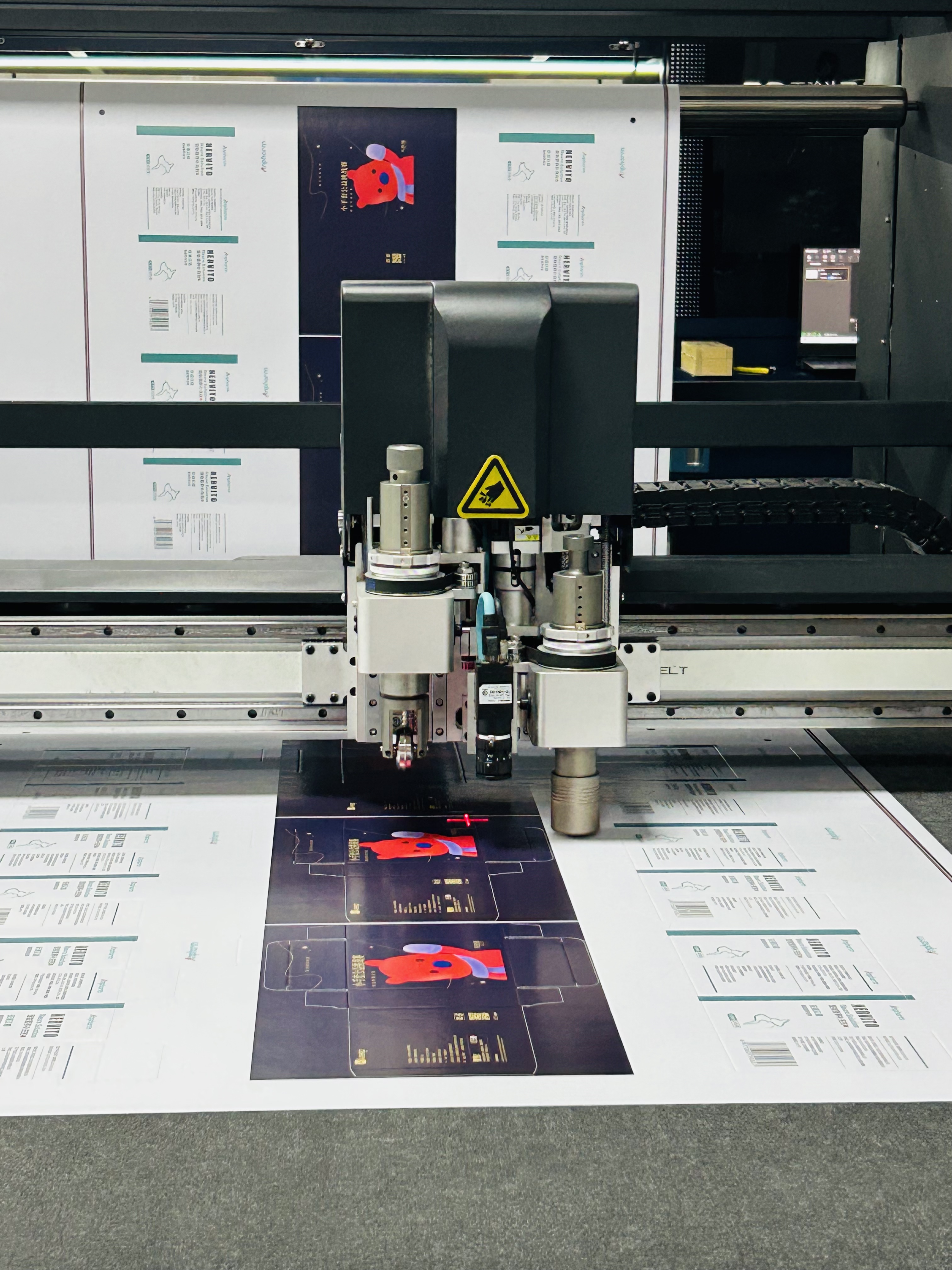
In 2023, ZCCUTTER launched the ZCBX inkjet-cutting integrated solution.
The significance of this isn't just connecting a printer and a cutter together. It answered a question the industry had long left unresolved: Can digital printing and digital cutting be completed on the same production line?
The answer is yes. File in, print + cut out simultaneously. Graphics, knife lines, registration, creasing, V-grooving—all completed in one pass. No file export-import, no secondary alignment, no waiting for dies.
But as soon as this question was answered, the next one came:
What one machine can do, can ten machines still do?
What one master craftsman can tune parameters for, can someone else still tune out?
What one factory can run through, can it still run through when moved to another city?
These questions aren't something one machine can answer.
II. ZhenCaiYun: Extracting Experience from People, Putting It in the Cloud
After the hardware-level breakthrough, we started doing software-level infrastructure.
What ZhenCaiYun solves are four problems:
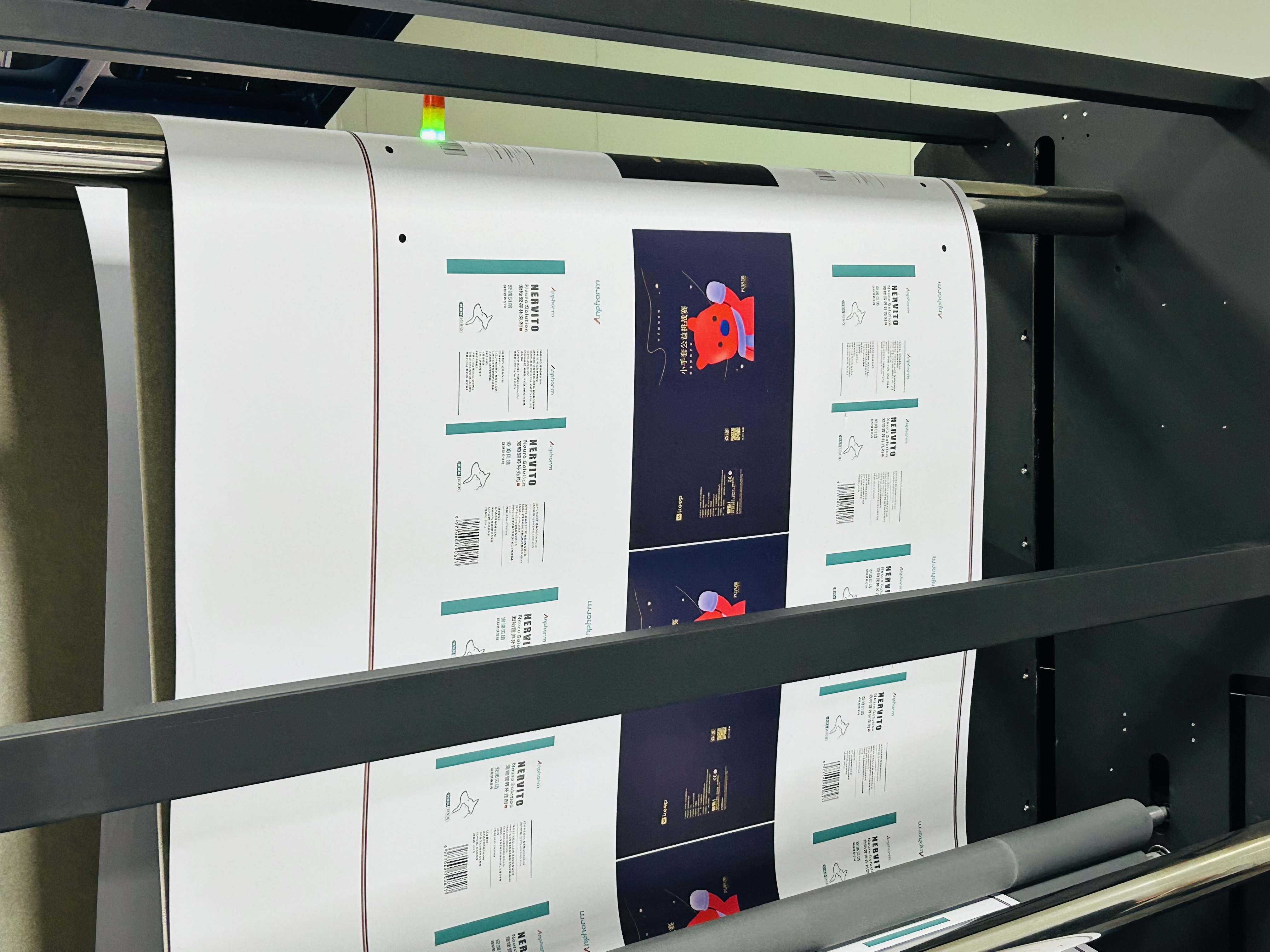
First, process library to cloud. A master craftsman's ten years of material parameters—how deep to cut cardstock, what knife for corrugated, what speed for EPE—used to only exist in his head. Now all entered into ZhenCaiYun AI1500 material process library, 1500+ material parameters preset, HQ tunes once, nationwide branches call directly.
Second, unified files and toolpaths. Previously, design files went through multiple manual conversions before reaching the cutter—export PDF, import cutting software, manual alignment, fine-tune toolpaths. Every step was a chance for errors. ZhenCaiYun unifies the entry point, automatic format conversion, automatic toolpath generation.
Third, multi-machine scheduling. One factory has multiple machines, one group has multiple bases. Which machine is idle, which order is priority, which parameters are latest—ZhenCaiYun schedules uniformly, no manual production planning needed.
Fourth, data traceability. First article reports automatically generated, process parameters, material batches, operators, completion time—all traceable. During audits, no need to dig through paper stacks, the system retrieves directly.
ZhenCaiYun isn't a nice-to-have tool. It's the prerequisite for SMC to operate—without this cloud, every machine is an isolated island.
III. Still Missing One Link: Organization
Hardware connected, software in the cloud. But we quickly discovered something was still missing.
We sold a ZCBX to a medium-sized packaging factory, and they asked: "Where in my factory does this equipment go?"
Put it in the printing workshop? Who preprocesses prepress files? Who validates box styles? Who tunes material parameters?
Put it in the die-cutting workshop? Then the flexibility of digital printing is wasted.
Designate a separate area? Then who manages it? How does the process flow? How does it connect with upstream and downstream?
This question made us realize: equipment can be bought, software can be installed, but without a dedicated "organizational unit" to承接 this process, print-cut integration is just a beautiful production line, not a replicable system.
This is the reason SMC—Smart Packaging Prepress Manufacturing Center—was born.
SMC isn't a machine, isn't software. It's a physical organizational unit that integrates hardware, software, process, and people.
IV. SMC Isn't a New Invention, It's What European and American Companies Are Already Doing
SMC isn't a concept created from nothing. Large European and American printing and packaging companies are already building similar centers, just not by this name:
- RR Donnelley: 17 global Premedia centers + 2 Digital Solution Centers, responsible for file preflight, color management, cross-factory distribution
- DS Smith: Regional design innovation centers, doing structural design, prototyping, on-site customer demonstrations
- Smurfit Kappa: Experience centers, doing box style development, material testing, digital prototyping
- WestRock: Packaging solution centers, doing structural engineering, prepress file processing, prototype production
Their common characteristic: concentrating prepress, prototyping, and structural validation in one physical space, close to customers, fast response.
But they also share a common bottleneck: prototyping is digital, but mass production reverts to analog.
Donnelley's Premedia centers process files, but at the factory end they still need to make dies, wait for dies, trial cut. DS Smith's design centers produce structural drawings, but at mass production they still rely on traditional die-cutting.
What SMC does is help them turn "semi-digital" into "fully digital"—letting the digital parameters from prototyping directly become process instructions for mass production.
V. Three SMC Deployment Forms
SMC isn't a fixed configuration, but an organizational unit flexibly deployed based on customer scale and business scenarios.
Form One: Branch-Level SMC (Minimum Unit)
Applicable to: Regional box prototyping shops, traders, brand owner internal packaging labs
Configuration:
- 1 digital printer
- 1 ZCRB dual-knife digital cutter
- 1 color management workstation
- ZhenCaiYun access
Capability:
- 8 hours to graphics, 24 hours to physical sample
- Covers color boxes, gift boxes, small batch displays
- One piece minimum, change design = change sample
Typical scenario: Brand owner designers cut their own samples, print their own, test their own, then directly send the process package to suppliers after confirmation.
Form Two: Regional-Level SMC (Standard Unit)
Applicable to: Medium packaging factories, regional printing groups, digital printing store clusters
Configuration:
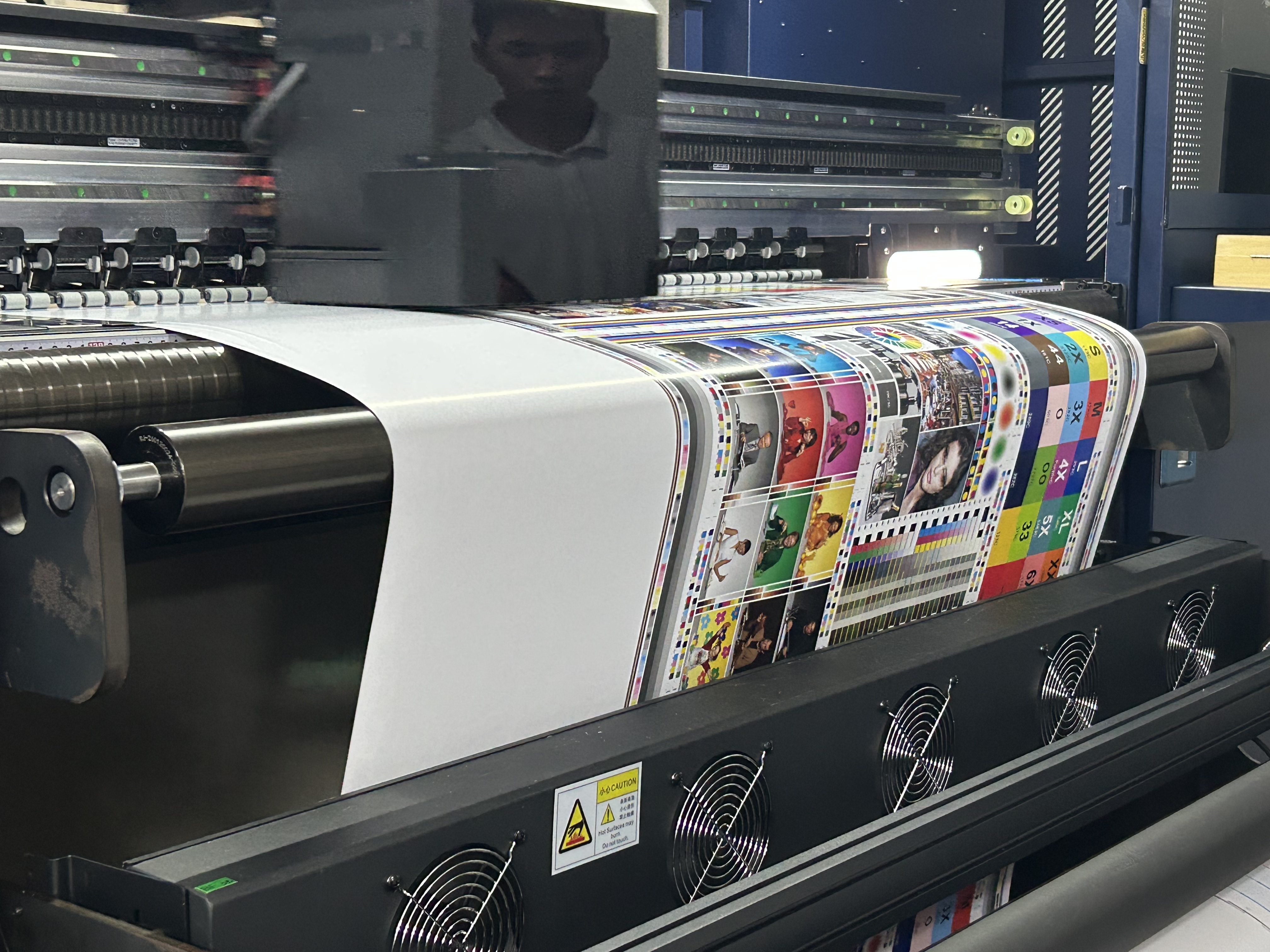
- Digital printing connected line (compatible with EFI/HP/domestic inkjet)
- ZCBX1816 print-cut connected line
- ZhenCaiYun process management platform
Capability:
- Covers prototyping, small batch, irregular inserts, EPE/EVA/honeycomb
- Multiple stores share process library, parameters cloud-distributed
- First article reports automatically generated, ISTA-testable
Typical scenario: Regional center uniformly tunes parameters, subordinate stores call directly, solving the "only this one master craftsman" problem.
Form Three: Global-Level SMC (Multi-Site Unit)
Applicable to: Multinational packaging groups, global brand owners, automotive parts Tier 1 suppliers
Configuration:
- HQ SMC (R&D + validation center)
- Overseas base SMC (execution + replication nodes)
- ZhenCaiYun global process library
Capability:
- HQ tunes parameters once, distributes to all global bases
- Everywhere uses ZCCUTTER calling the same process library
- CCD vision automatically compensates for local material batch differences
- First article reports, ISTA data, audit ledgers synchronized globally
Typical scenario: Tri-Wall's Thailand factory, Poland factory, Mexico factory cutting the same insert use the same set of parameters.
VI. SMC's Triple Identity
As SMC lands in more scenarios, we've discovered it actually carries three identities.
Identity One: Enterprise's Prepress Manufacturing Node
This is SMC's most basic identity. It承接s the entire process of enterprise file processing, color management, structural validation, prototyping, small batch production, and process archiving—the hub between prepress and post-press.
Identity Two: Vocational School Training and Competition Foundation
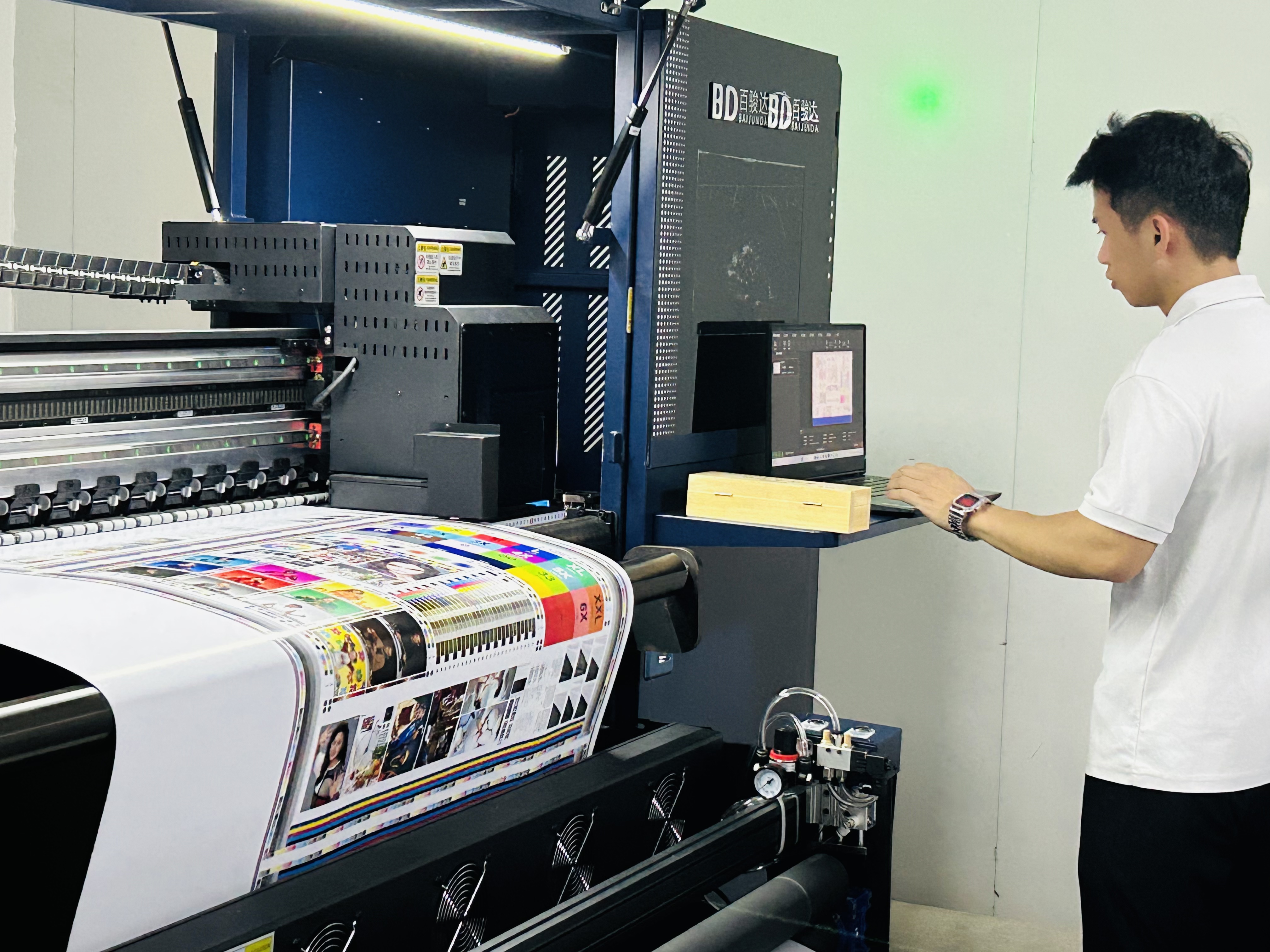
In 2026, ZhenCai Technology reached cooperation with Dongguan Polytechnic. Faculty and students from Dongguan Polytechnic's Creative Design and Media College entered ZhenCai Intelligent Manufacturing Center, treating digital printing, digital cutting, packaging structure, and paper art models as real projects to run.
Traditional packaging engineering major training courses had students learning: design software outputs drawing → manual sample → wait for die → trial cut. After a semester, the materials actually cut by hand don't exceed three types.
After introducing the SMC solution, training became:
- Students design files → import to ZhenCaiYun → physical sample in 10 minutes
- Change drawing = change sample, one class can iterate 3-5 solutions
- Materials accessed expand from cardstock, corrugated to EPE, EVA, honeycomb board
- First article reports automatically generated, students learn not just "cutting" but "the full chain from design to manufacturing"
That same year, Shenzhen Polytechnic's Digital Media College packaging planning and design team used ZhenCai ZCRB2516 to participate in the 2026 World Vocational College Skills Competition light industry track. In 20 days they completed the full process of "demand research—AI-assisted design—structural R&D—digital cutting prototyping—graphic printing—full pallet assembly," winning a silver award in their first competition.
The competition wasn't a drill, it was running at real order pace—no dies, no master craftsman following the machine, model changes by file, parameters by ZhenCaiYun. Competition produces samples, classroom produces work orders.
Identity Three: Industry Talent Standard Interface Layer
SMC runs process parameters in factories, runs teaching syllabi in schools, runs scoring standards in competitions. If these three sets of things can be unified, it means: a student who learns skills using SMC in school can directly start work when they reach a factory; an employee trained by a factory using SMC, if they switch to another factory also using SMC, doesn't need retraining.
This is SMC's deepest value—it's not a set of equipment, not a set of software, it's a replicable work standard.
VII. SMC's Commercial Value: Not Just Saving Money, But Making Money
For Packaging Factories
Prototyping cost down 70%
- Traditional prototyping: make die 300-2000 yuan/set, wait for die 3-7 days
- SMC prototyping: no die cost, hourly sample output
Minimum order threshold disappears
- Traditional die-cutting: 500 pieces minimum to spread die cost
- SMC: 1 piece minimum, 50 pieces and 5000 pieces only differ in run time
Changeover efficiency up 10x
- Traditional die-cutting: change product = change die, stop machine 30 minutes - 2 hours
- SMC: change product = change file, minute-level switch
For Brand Owners
New product launch cycle shortened 40%
- Traditional: design → prototype → revise → make die → trial production → mass production, 4-6 weeks
- SMC: design → SMC prototype → confirm → mass production, 1-2 weeks
Supply chain flexibility greatly increased
- No longer limited by "which factory has the die"
- Multiple suppliers all equipped with ZCCUTTER, send file and they can cut
- Urgent orders, promotional packaging, seasonal products, respond anytime
For Global Customers
Multi-site consistency no longer relies on luck
- Traditional: each base cuts differently, customer needs to send people to station on-site
- SMC: process package cloud-distributed, globally consistent
Audit efficiency improved
- Traditional: audits require preparing piles of paper records, supplementing Excel
- SMC: first article reports, process parameters, material batches, system retrieves directly
VIII. SMC's Position in the Digital Printing Landscape
Using a simple framework to explain SMC's role in the entire digital printing ecosystem:
| Stage | Who's Doing It | Digitalization Level | SMC's Role |
|---|---|---|---|
| Prepress file processing | Donnelley Premedia, Esko | Highly digital | Interface, don't rebuild |
| Digital printing | EFI Nozomi, HP PageWide, Durst | Highly digital | Compatible, not bound to one |
| Box forming | Packsize X5 | Medium (limited to standard box styles) | Complementary, focus on irregular |
| Irregular inserts/cushioning structures | Industry blank | Low digitalization | SMC fills |
| Multi-site process consistency | No standardized solution | Low digitalization | SMC fills |
| School training/competition foundation | Industry blank | Low digitalization | SMC fills |
SMC doesn't make printers, doesn't replace Esko, doesn't compete with Packsize for standard box style business.
It only does three things:
- Completely digitize "cutting," speaking the same data language as "printing"
- Turn "multi-site consistency" from relying on people to relying on systems
- Extend "industrial capability" from factories to classrooms and competition venues
IX. Closing: The Door Is Completely Open
ZCBX welded "printing" and "cutting" onto one line.
ZhenCaiYun welded process and experience into the cloud.
SMC welded all of this into an organizational unit.
One machine can change one production line.
One center can change one company.
One school can change a generation of practitioners.
When EFI and HP turn "printing" into digital infrastructure, when ZCCUTTER turns "cutting" into infrastructure of the same level, in the middle a node is needed to connect the two ends, run through the process, manage the data, and train the people.
This node is SMC.
That door that was only half open is now completely open.
Not by a faster machine, but by a system that can串 together prepress, printing, and post-press.
Not replacing anyone, but tearing down the wall between "printing" and "cutting."
Not just serving factories, but delivering the capability "from file to physical object" to every classroom and competition venue.