
Short Runs Are Rewriting the Production Line: What aPak, Zünd, and Packsize Tell Us About the Next Stop in Post-Print Precision
全球近6000家客户的共同选择
Short Runs Are Rewriting the Production Line: What aPak, Zünd, and Packsize Tell Us About the Next Stop in Post-Print Precision
Sweden's aPak, America's Packsize, Switzerland's Zünd — three peers, three approaches, one shared trend: short runs are rewriting the rules of post-print precision cutting. ZCCUTTER has studied each one closely, but the soil we grew from isn't Europe or America — it's China. It's the daily changeovers, rush jobs, and mixed substrates of the Chinese market that forged who we are. From Zhen Cai Yun to multi-system digitalization to intelligent automation, we've done one thing: made no packaging too difficult to make.
Introduction: Three Peers, Three Lessons
Let me tell three stories. Three stories about post-print precision cutting, and none of them star ZCCUTTER.
The first story takes place in Sweden. aPak, a traditional printing company, was being backed into a corner by ever-smaller orders. Prototyping required one machine, short-run production required another, and in between you had to wait for someone to load sheets, adjust the machine, and run test cuts. They bought a Kongsberg C64 and merged prototyping and short-run production into a single process. Their automatic registration system saves 30 minutes per changeover. One machine doing the work of two.
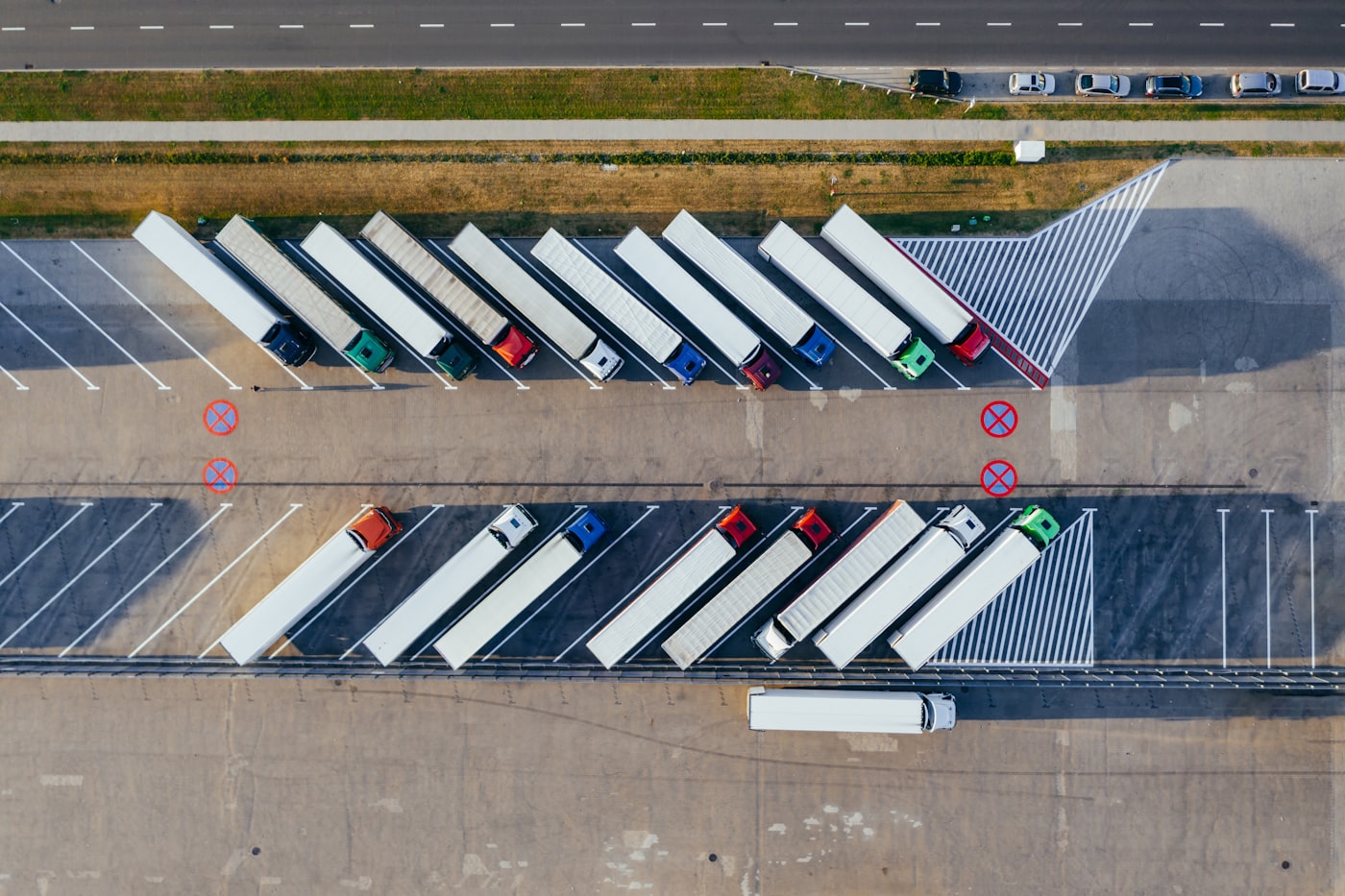
The second story takes place in America. Packsize and EFI joined forces. The X5 Nozomi bridges digital printing and inline die-cutting and folding — roll-fed paper in, finished box out, in 6 seconds. Printing and post-print are no longer separate worlds. On-demand packaging has moved from concept to mass production.
The third story takes place in Switzerland. Zünd, the benchmark in precision cutting for thirty years. They don't sell standalone machines — they sell systems. PrimeCenter for nesting, Cut Center for control, Connect for management — hardware, software, and ecosystem, all in one. Once customers are in, they don't want to leave.
Three stories, three lessons.
aPak taught us: the first principle of post-print precision cutting is flexibility. When orders get smaller and more varied, one versatile machine is worth more than two specialized ones.
Packsize taught us: post-print must keep pace with digital printing. Printing has gotten fast enough to measure in seconds — post-print can't still be measured in hours.
Zünd taught us: the best product is one customers can't live without. System capability is the deepest moat.
Three peers, three paths — all worthy of our respect.
But they also made something clear: these solutions grew from the needs of European and American markets. China's needs are different, so what we've grown looks different too.
Short Runs Aren't the Fringe — They're the Mainstream
Global packaging orders are undergoing a quiet structural shift.
Batch sizes are shrinking. Ten years ago, an average packaging order started at 5,000 units. Today, 500 isn't small, and 50 isn't unusual. Brand owners want rapid test marketing, small-batch trial runs, and data-driven reorder — not mountains of inventory sitting in a warehouse.
SKUs are multiplying. The same customer who had three SKUs last year now has thirty. Each one needs its own cutting parameters, its own toolpath, its own delivery schedule.
Lead times are compressing. "By next Friday" has become "Can you have a sample by tomorrow morning?" "Two-week delivery" has become "I need to see finished goods within three days."
This isn't a regional phenomenon. It's a global trend driven by e-commerce and personalized consumption. Europe, North America, Southeast Asia — and China most of all.
But the intensity in China's market far exceeds what Europe and America experience.
No country on Earth has a packaging and printing industry larger than China's. None. More importantly, China's internet-driven commerce has spawned the world's most aggressive new-retail ecosystem. Livestream e-commerce, community group buying, instant delivery, C2M customization — these models are supplementary abroad but mainstream in China. Each one creates new packaging demands: customized gift boxes, personalized shipping boxes, small-batch trial packaging.
Customization, personalization, small-batch production — layer these three together, and Chinese factories face an order structure more fragmented, more complex, and more unpredictable than any other market on Earth.
It's not that Chinese factories suffer more. It's that Chinese factories face harder exams.
And hard exams are what produce real answers.
Three Peers, Three Approaches
We've studied each peer carefully.
aPak's approach is pragmatic: one machine doing two jobs. Prototyping flexibility and short-run capacity combined on a single device. For small-to-medium printers, this is the most direct path to efficiency gains. But its limits are also clear: substrate range is limited, thickness adaptability is limited, and when customer needs exceed a certain envelope, you still need a second machine.
Packsize's approach is thorough: embed post-print directly into the printing workflow. Roll-fed paper to finished box in one continuous flow. For e-commerce fulfillment centers, this is the efficiency ceiling. But its prerequisite is standardization — corrugated board only, specific size ranges only. Once a customer's material or dimensions fall outside that range, the system can't help.
Zünd's approach is elegant: build a moat with system capability. Hardware, software, ecosystem — once customers are in, they don't want out. For high-end signage and packaging firms, this is a direction worth investing in. But the barrier is high — not just price, but learning cost, maintenance cost, and operator skill requirements.
None of these approaches is better or worse — they simply serve different scenarios.
But they share a common assumption: customer needs are relatively standardized. Limited substrate variety, manageable changeover frequency, high tolerance for labor costs.
The reality in China: substrate variety is several times that of Europe and America. Changeover frequency is several times higher. Sensitivity to labor costs is several times greater.
So we can't simply copy any single approach. We had to grow our own answer.
The Road ZCCUTTER Has Walked
The road ZCCUTTER has walked didn't require imitating Europe or America. We walked it step by step, with time and technology.
It started from a single shop in Huanan City, Shenzhen.
Huanan City is one of China's hubs for printing and packaging. Hundreds of shops packed tightly together — selling paper, ink, adhesive, die-templates. And among them, a digital quick-print company called Yide Xuan — China's first company dedicated exclusively to color box prototyping.
Yide Xuan's founder, Chao Hui Xie, had twenty years in packaging printing. He spotted a problem: when brand owners needed samples, traditional printers required a 1,000-unit minimum. Prototyping meant making plates, printing, laminating, die-cutting, mounting to corrugated — long cycle, high cost. A single sample could cost hundreds of yuan and take a week. If the client wasn't happy and wanted changes, start over.
He thought that was unreasonable.
So he rented a shop in Huanan City, bought a sample-cutting machine, and started doing one thing: color box prototyping, one piece and up.
Yide Xuan wasn't ZCCUTTER's customer — they were our fellow traveler. In an era when most people didn't even know what "small-batch customization" meant, they had already cracked "1 piece and up, 3–8 hour turnaround, 90% cheaper than traditional prototyping." They used a sample cutter for prototyping, a digital press for graphics, and manual mounting, laminating, and assembly — compressing an entire factory production line into a single shop.
Every problem they hit — inaccurate cuts, slow cutting, having to recalibrate every time the material changed — became input for our product improvements. Yide Xuan pushed us to make machines faster, more precise, and more versatile. You could say ZCCUTTER's first lesson in small-batch packaging was learned in that shop in Huanan City.
Later, we met Guangdong Wuyou Printing.
Wuyou Printing, based in Dongguan, did something similar to Yide Xuan but at larger scale and faster pace. They didn't take million-unit orders — they served brand test runs, e-commerce quick-response orders, and new-consumer-brand trial runs. Dozens or hundreds of units were the norm; over a thousand counted as a big order.
We prepared three solutions for Wuyou Printing:
First: ZCRB1410 integrated print-and-cut. 1400×1000 mm, 0–60 mm thickness coverage, oscillating knife, straight knife, creasing wheel, CCD vision registration — cutting speed 1800 mm/s, accuracy 0.05 mm. Positioned as "30 color boxes shipped in 1 hour" — for brand trials, custom color boxes, and rush jobs without panic.
Second: ZCRB2516 roll-to-roll. 2500×1600 mm, 0–30 mm, automatic feed with loading rack and take-up table. Roll-fed coated paper and gold/silver card stock in, unmanned high-efficiency output out — ideal for roll-fed small-batch packaging production.
Third: ZCRB1814 with auto sheet feeder. 1800×1400 mm, 0–60 mm, automatic sheet-fed input. For runs under 500 sheets of single-sheet card stock, laminated gift boxes, and high-end custom boxes — 5-minute changeover, no downtime wasted.
One system handles rush jobs, one handles roll stock, one handles precision-cut gift boxes. Wuyou Printing used these three solutions to prove one thing: small-batch isn't "can't be done" — it's a matter of having the right equipment and methods.
Then we began serving Yutong Packaging.
Yutong is a leading enterprise in China's packaging industry, long serving the packaging supply chains of global brands like Apple, Microsoft, and Amazon. The quality standards they execute against are Apple's SQE system — with extremely rigorous requirements for cutting accuracy, repeat positioning tolerance, material utilization, and equipment stability.
ZCCUTTER's equipment on Yutong's production lines has passed the validation of those standards.
From a single shop in Huanan City to serving the packaging supply chain of the world's top brands — ZCCUTTER walked that road over ten years.
We didn't imitate anyone. Yide Xuan taught us how to do small-batch. Wuyou Printing taught us how to scale small-batch. Yutong Packaging taught us how to hold ourselves to the world's highest standards. Every customer has been our teacher, but the final answer — we cut it out ourselves, one cut at a time.
Making No Packaging Too Difficult to Make
"Making no packaging too difficult to make" isn't a slogan — it's a distillation of product philosophy.
Where does the "difficulty" show up?
Changeover is hard — switching jobs means stopping the machine, changing blades, adjusting parameters, running test cuts, and half an hour is gone. ZCCUTTER's dual-head shuttle swaps between creasing wheel and cutting tool in minutes. One machine does two jobs.
Calibration is hard — changing material means re-testing blade depth, frequency, and speed, all dependent on a master technician's experience. AI1500 Material Process Library: select the material code, and the machine auto-matches parameters. Even new operators can run it.
Materials are varied — corrugated, greyboard, EPE, honeycomb, PET, acrylic, leather, composites — each requiring different cutting parameters. ZCCUTTER's thickness-tiered coverage spans 0–60 mm, 0–100 mm, and 0–150 mm. One device handles them all.
Deadlines are tight — the client needs a sample tomorrow, and the traditional workflow can't possibly make it. ZCCUTTER's prototyping parameters equal production parameters: once the sample is approved, go straight to production without recalibrating.
Labor is expensive — can't recruit, can't retain, labor costs keep climbing. ZCCUTTER's progressive automation — from standalone machine to automatic feeder to robotics to full production line — each step reduces dependence on manual labor.
Every ZCCUTTER product feature was designed to address one of these "difficulties." From Zhen Cai Yun to multi-system digitalization to intelligent automation, it's a complete chain: making equipment operation simpler and simpler, making the customer's business easier and easier.
Closing: Learning from Peers, Walking with the Chinese Market
Back to those three peers from the opening.
We learned flexibility from aPak — one machine doing two jobs. We didn't just learn that lesson, we took it one step further: dual-head shuttle lets one machine switch seamlessly between corrugated post-print finishing and inner-tray precision cutting.
We learned efficiency from Packsize — post-print must keep pace with printing. Our fully automatic feeder and robotic collaboration ensure that the cutter's infeed and outfeed no longer require people waiting on machines.
We learned systems from Zünd — hardware, software, ecosystem as one. Our Zhen Cai Yun platform and multi-system digitalization ensure that equipment is no longer an island, but part of the factory's digital fabric.
But our ultimate teacher has been the Chinese market.
It's the Chinese market's daily changeovers, rush jobs, and mixed substrates that transformed ZCCUTTER from a company that makes cutting machines into a company that builds a packaging ecosystem. From equipment networking to multi-system integration to intelligent process libraries to progressive automation — every capability was grown on the floor of Chinese factories.
Short runs are rewriting the production line. This isn't a prediction — it's a reality already unfolding.
We didn't come to rewrite the rules. We were trained by the Chinese market to help factories adapt to the new rules.
Learning from peers, walking with the Chinese market.
About Zhen Cai Technology · ZCCUTTER
Founded in 2015, Zhen Cai Technology specializes in intelligent CNC cutting systems for flexible materials, serving packaging and printing, advertising, 3C electronics die-cutting, leather and home textiles, and new-energy composite materials. We command full-chain in-house R&D in vision algorithms, process databases, CNC systems, and machine structure — validated by nearly 6,000 users worldwide.
Four core technologies: 20-megapixel four-point CCD vision registration · dual-loop closed-loop Z-axis depth control · AI1500 Material Process Library · multi-zone vacuum hold-down.
Flagship series: ZCRA single-head / ZCRB dual-head / ZCRC engrave-cut head / ZCRD dual-gantry digital cutting system.
We invite you to visit our global application showrooms for free sample cutting and customized solutions.