
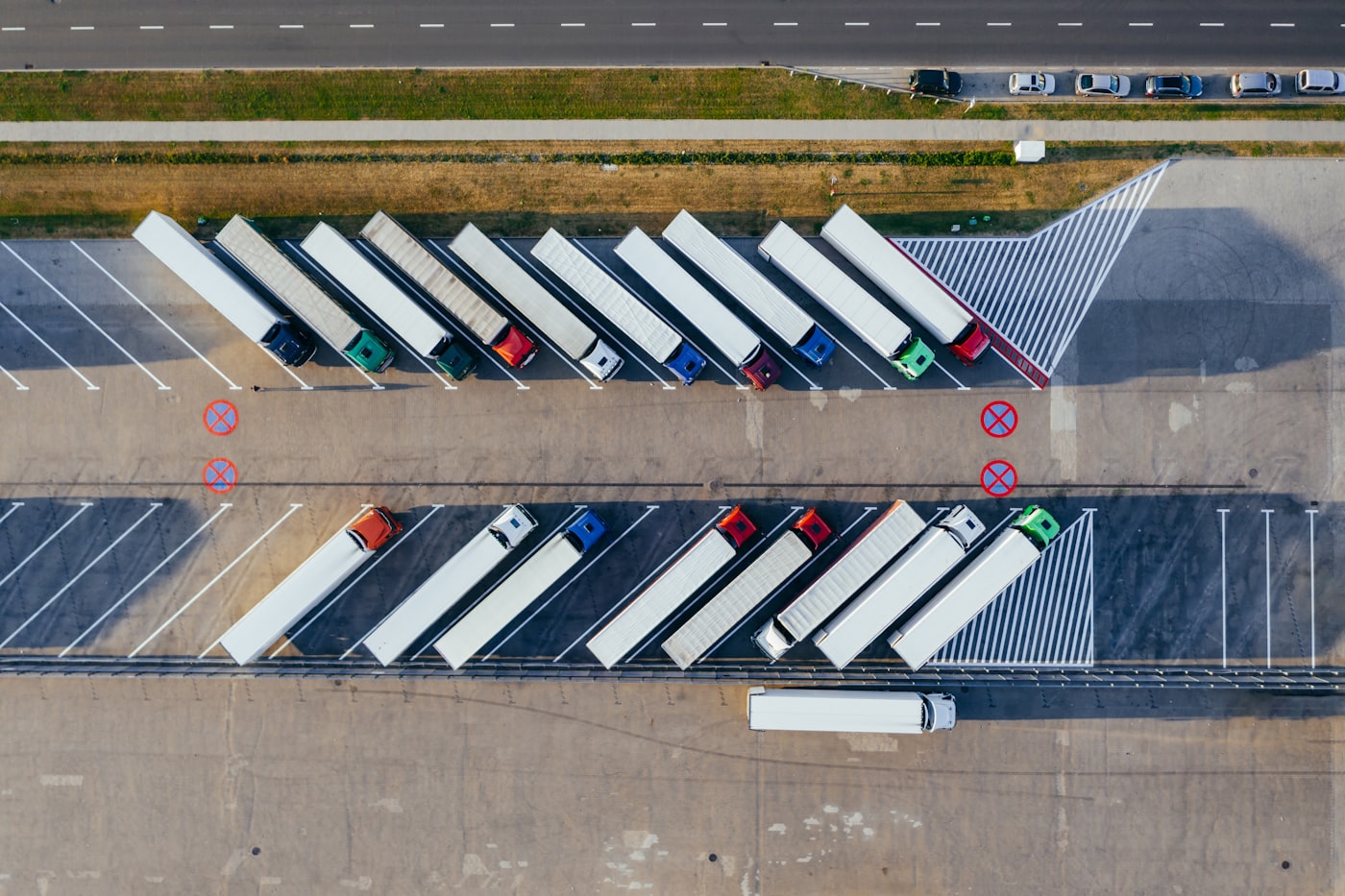
From a Cardboard Car to the On-Demand Production Era of Global Industrial Packaging
全球近6000家客户的共同选择
From a Cardboard Car to the On-Demand Production Era of Global Industrial Packaging
I. That Cardboard Car: A Self-Introduction to the World
We built a full-scale Jeep Wrangler entirely from corrugated cardboard. Over 800 parts, 72 hours of continuous operation, four adult men could sit inside, and it ended up displayed in a hall dedicated to global Jeep culture.
This sounds like an art installation. But for us, it was a deliberate act of "self-exposure":
We wanted the world to remember the name ZCCUTTER—not just as a cutting machine, but as a technology about how flexible materials are manufactured.
The cardboard car is brand expression. It doesn't represent that we can build cars; it represents that we can handle complex structures, irregular parts, and multi-material combinations while maintaining precision, stability, and process repeatability—enough to run continuously for 72 hours without drift.
Those who remember this car will trace it back to see the larger system behind it—
Global industrial packaging is moving from "high-volume die-cutting" to "on-demand digital production."
II. Global Industrial Packaging Already Has a Mature Division of Labor
Automotive industrial packaging is not a blank market. It already has a mature global division of labor:
- Returnable systems: ORBIS, Nefab, Schoeller Allibert, SSI Schaefer—returnable totes, pallets, dunnage, serving OEMs and Tier 1 reverse logistics
- Heavy-duty corrugated: DS Smith, Smurfit Kappa, Tri-Wall—heavy corrugated, irregular cartons, inner dividers
- Protective foam: Sealed Air, Sonoco, Knauf—EPE/EPP cushioning, anti-static, precision inserts
- China battlefield: Guangda Tongchuang, Tenewell, Fengyuan Tenewell—new energy returnable packaging, heavy corrugated, protective foam
These companies are not ZCCUTTER's competitors; they are our application scenarios.
We're not competing for anyone's returnable tote lines, heavy corrugated production, or foam molding share. What we replace is the most bottlenecked segment in this vast system:
Die-making → Waiting → Small batches impossible.
III. Industrial Packaging Is Restructuring: From "Forecast-Inventory" to "Demand-Response"
For the past twenty years, the logic of industrial packaging has been "high volume, low variety, long cycles." Die-cutting economics relied on scale to spread costs.
But this logic is failing. Not because equipment isn't good enough, but because order structures have changed:
- Faster model/machine iteration: New vehicles redesigned every 2-3 years, new energy battery pack structures change every generation, packaging must follow
- SKU explosion: Customized vehicles, frequent 3C electronics models, medical device customization—one part, one package
- More small-batch prototyping: New projects need packaging finalized simultaneously during prototyping; waiting for dies = delaying the entire project
- Multi-site coordination: OEMs building factories globally, packaging must be produced locally in different countries, and "what's produced in each place must be the same item"
Industry data already shows the trend: small-to-medium batch custom orders growing at double-digit rates annually, with over 60% of brand owners showing significant increased demand for "rapid iteration, small-batch trial and error."
Traditional die-cutting reveals structural shortcomings against these four changes:
| Dimension | Traditional Die-Cutting | Digital Cutting |
|---|---|---|
| Minimum order | 500-1000 pieces to spread die cost | 1 piece minimum |
| Changeover time | Wait 2-5 days for dies | Modify CAD file, minute-level switch |
| Material switching | Redebug die-cutting machine | One-click process library call |
| Multi-site consistency | Relies on master craftsman experience, hard to replicate | Process parameters cloud-distributed, global replication |
This isn't a matter of "30% efficiency improvement." It's a production method shift—from "invest in dies first, then produce" to "have the drawing, get the physical object."
IV. ZCCUTTER's Position: Not One More Machine, But the Process Hub
We've done digital cutting of flexible materials for seventeen years, starting from packaging prototyping, step by step entering automotive, new energy, 3C, and optical films.
Today, what ZCCUTTER delivers is not a cutting head, but a complete capability:
Hardware Layer
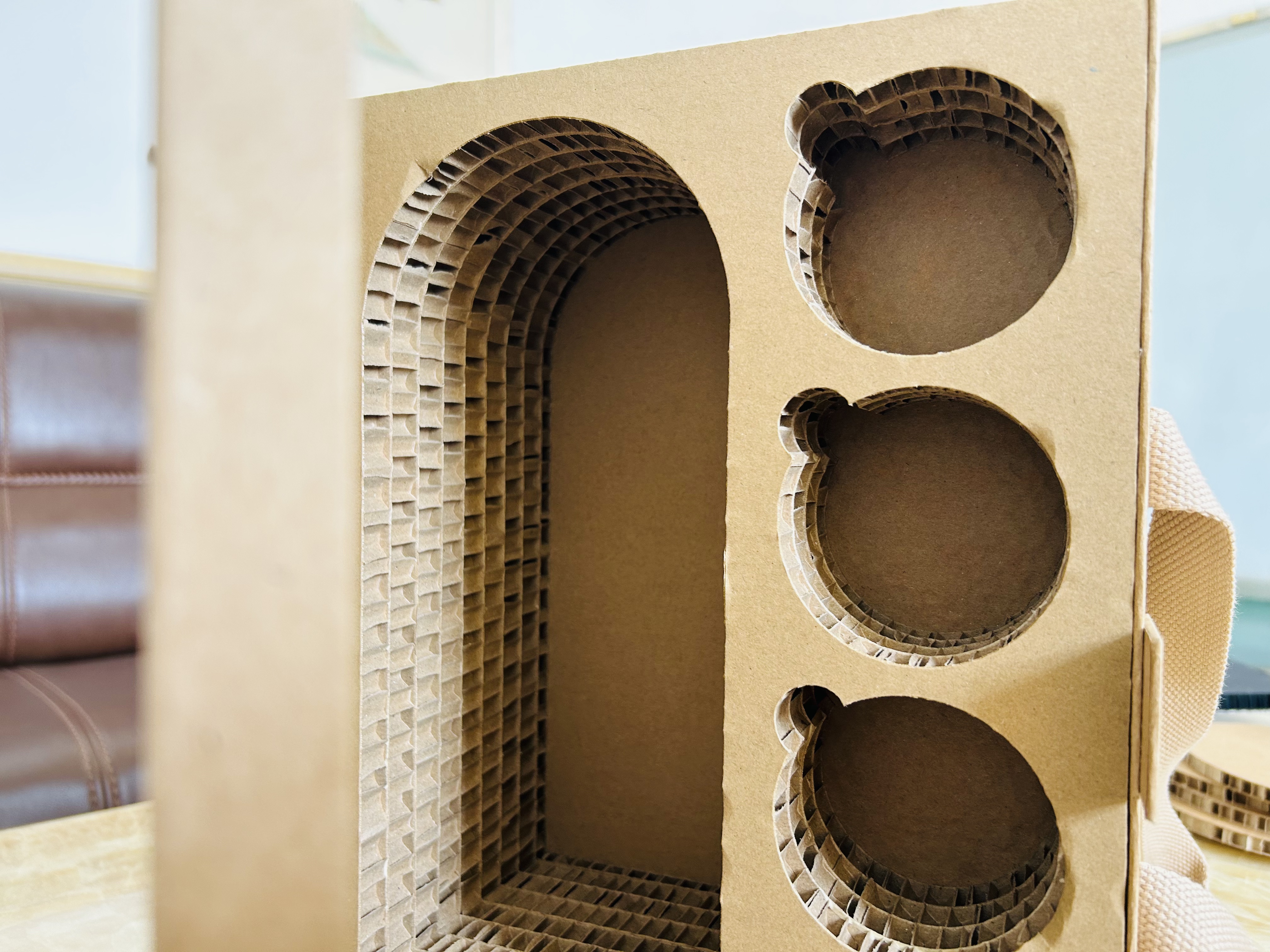
- ZCRA Single Knife: Dedicated to packaging insert prototyping. Corrugated, EPE, EVA, grey board, honeycomb board, 0-15mm (small format) to 0-60mm (large bed), positioning accuracy ≤±0.05mm, repeatability ≤±0.03mm. Cut irregular cushioning inserts, positioning slots, load-bearing structures—one piece minimum, no dies needed.
- ZCRB Dual Knife: Prototyping + small batch same line, cutting + creasing + V-grooving integrated, design change without stopping
- ZCRC Triple Knife: Corrugated outer boxes, displays, heavy-duty packaging high volume
- ZCRD Dual Gantry Four Knife: Same-die mass production, four spindles simultaneous, capacity ×4
Process Layer
- AI1500 Material Process Library: 1500+ material parameters, no machine adjustment when changing materials
- 20-megapixel four-point CCD vision: Positioning accuracy ≤0.1mm, automatic edge compensation
- Dual closed-loop Z-axis depth control: Cut through without cutting through, stable for thin and thick materials on same bed
- Multi-zone negative pressure adsorption: Irregular materials don't shift or delaminate
System Layer
- ZhenCaiYun (臻彩云): Process library to cloud, unified file and toolpath distribution, multi-machine scheduling, data auditing
- HQ adjusts parameters once, branches/bases/overseas factories call the same standard—no reliance on master craftsman feel
For packaging companies, this means:
- The EPE insert cut in Taizhou is the same item as the one cut in Poland
- New vehicle prototyping: drawing to physical object measured in hours
- Small batch orders are no longer "uneconomical"—one piece minimum can still be profitable
- What's cut isn't a sample; it's a packaging piece with first-article report, ready for ISTA testing
V. From Automotive Packaging to the Entire Industrial World
Automotive is the entry point, not the destination.
When we step back our perspective from "one car," we see the bigger picture—
New energy vehicle battery packs, 3C electronics, optical films, semiconductors, medical devices, cross-border equipment—every industry is seeing the same demand emerge:
- Multi-variety, small batch, fast iteration
- More irregular structures, fewer standard boxes
- New sample packaging must be finalized simultaneously with data
- Multi-site production requires global consistency
The technical logic behind these demands is the same set:
Material defines process; process drives equipment.
ZCCUTTER cut from corrugated, grey board, cardstock to EPE, EVA, honeycomb board, composite damping materials; from packaging inserts to battery cushion pads, sealing gaskets, optical films, thermal pads. One technical thread is continuous, the process database is continuous, customer relationships are continuous.
So we redefine ourselves:
ZCCUTTER is not one more cutting machine.
We are the technological infrastructure within the global industrial packaging system that "turns drawings into physical objects, consistently worldwide."
VI. Our Relationship with the Giants
Nefab has global systems and testing laboratories. Tri-Wall has over a hundred processing networks across Asia, Europe, and the Americas. ORBIS has a returnable packaging plastic molding system.
They do well. We don't need to replace them.
What we need to do is hand them a knife at the most painful segment in their production lines:
- Irregular inserts during prototyping that can't wait for dies
- Multi-variety small batch protective pieces where dies aren't economical
- Cross-site prototyping process gaps with inconsistent parameters
- First-article validation for new material introduction with no mature die-cutting process to reference
Digital cutting is not a disruptor of the packaging industry. It's the key node in the packaging industry's "on-demand production" chess game that turns drawings into reality.
VII. Closing: From One Car to an Era
The cardboard car is brand expression, making the world remember the name ZCCUTTER.
Packaging is the technical root system, letting us sharpen for seventeen years in complex structures, multi-materials, small batches.
Die-cut materials are capability extension, letting us move from "wrapping the outside" to "inside the vehicle."
Today, we put these three things together:
Global industrial manufacturing is moving from "high-volume standardization" to a new stage of "small batch, fast response, distributed."
This stage needs a new infrastructure—not relying on dies, not relying on master craftsmen, not relying on waiting, but relying on data, relying on process libraries, relying on turning experience into reusable parameters.
What ZCCUTTER does is exactly this.
We're not selling cutting machines.
We're in digital production technology for flexible materials.
Starting from one cardboard car,
Starting from one carton insert,
From one drawing to one physical object,
We accompany global industrial packaging into the era of on-demand production.