
45 Days, 800 Parts, 1:1 Scale: How ZCCUTTER Built a Corrugated Jeep Wrangler to Prove Its Machines
全球近6000家客户的共同选择
45 Days, 800 Parts, 1:1 Scale: How ZCCUTTER Built a Corrugated Jeep Wrangler to Prove Its Machines
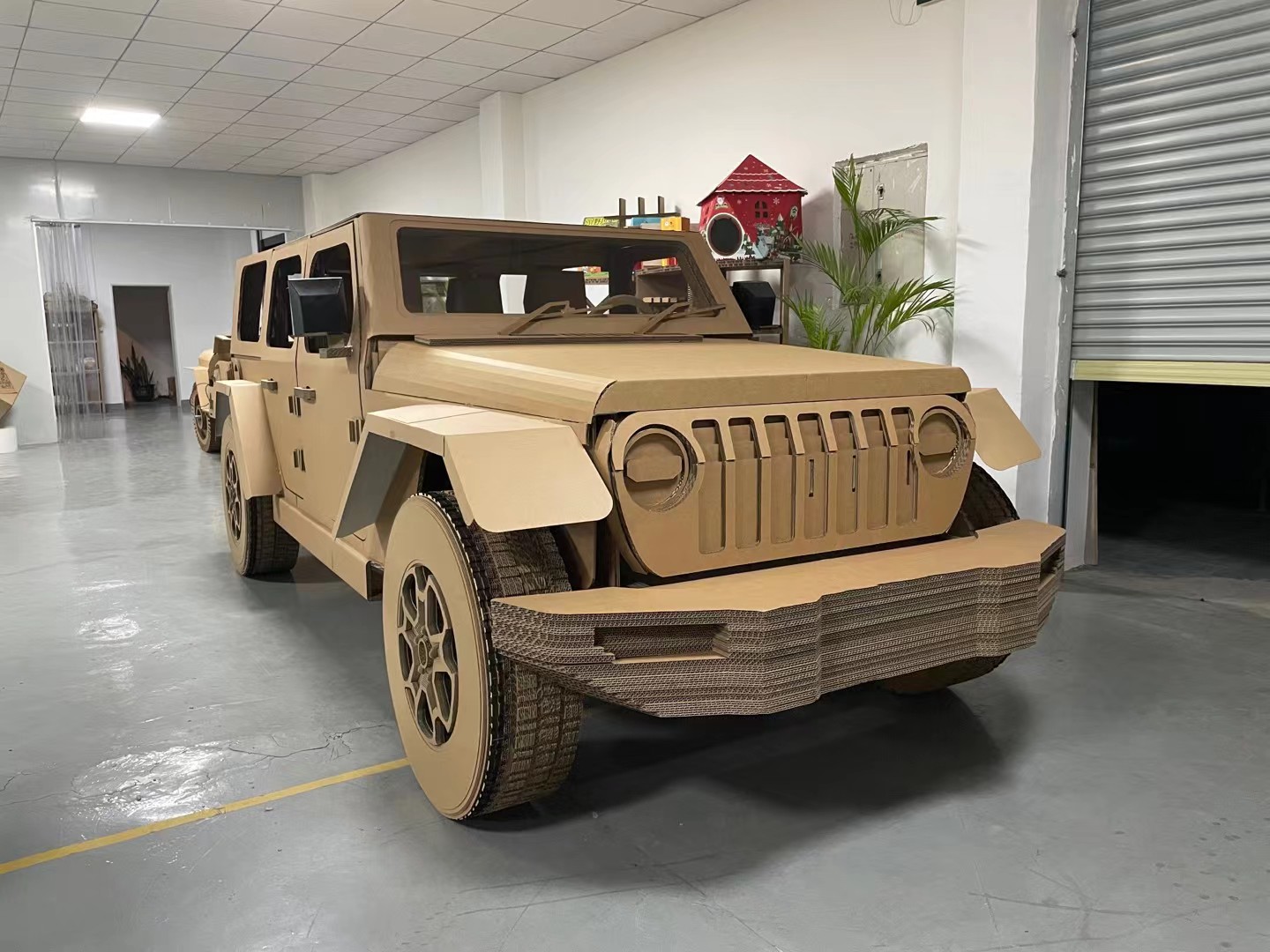
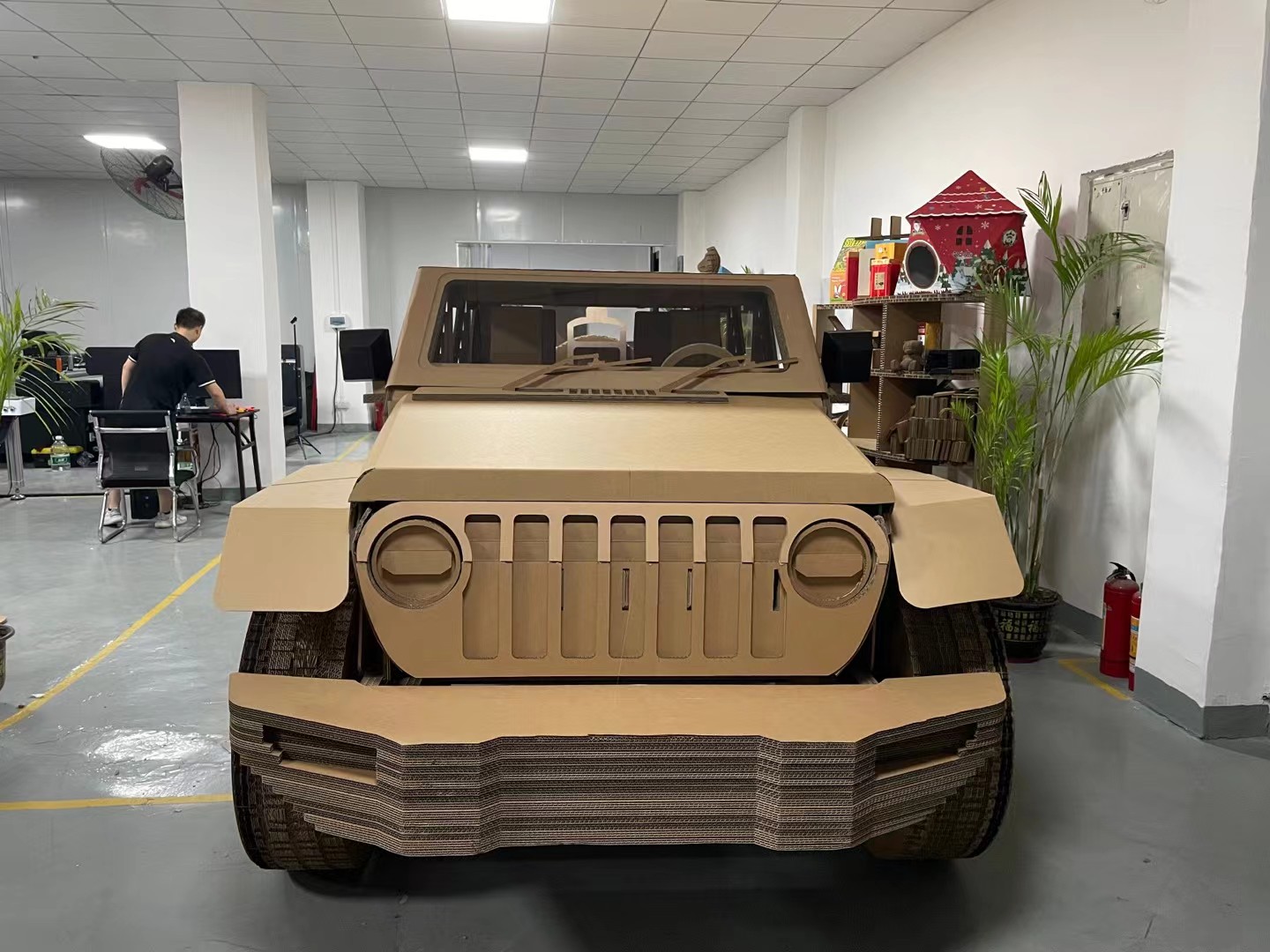
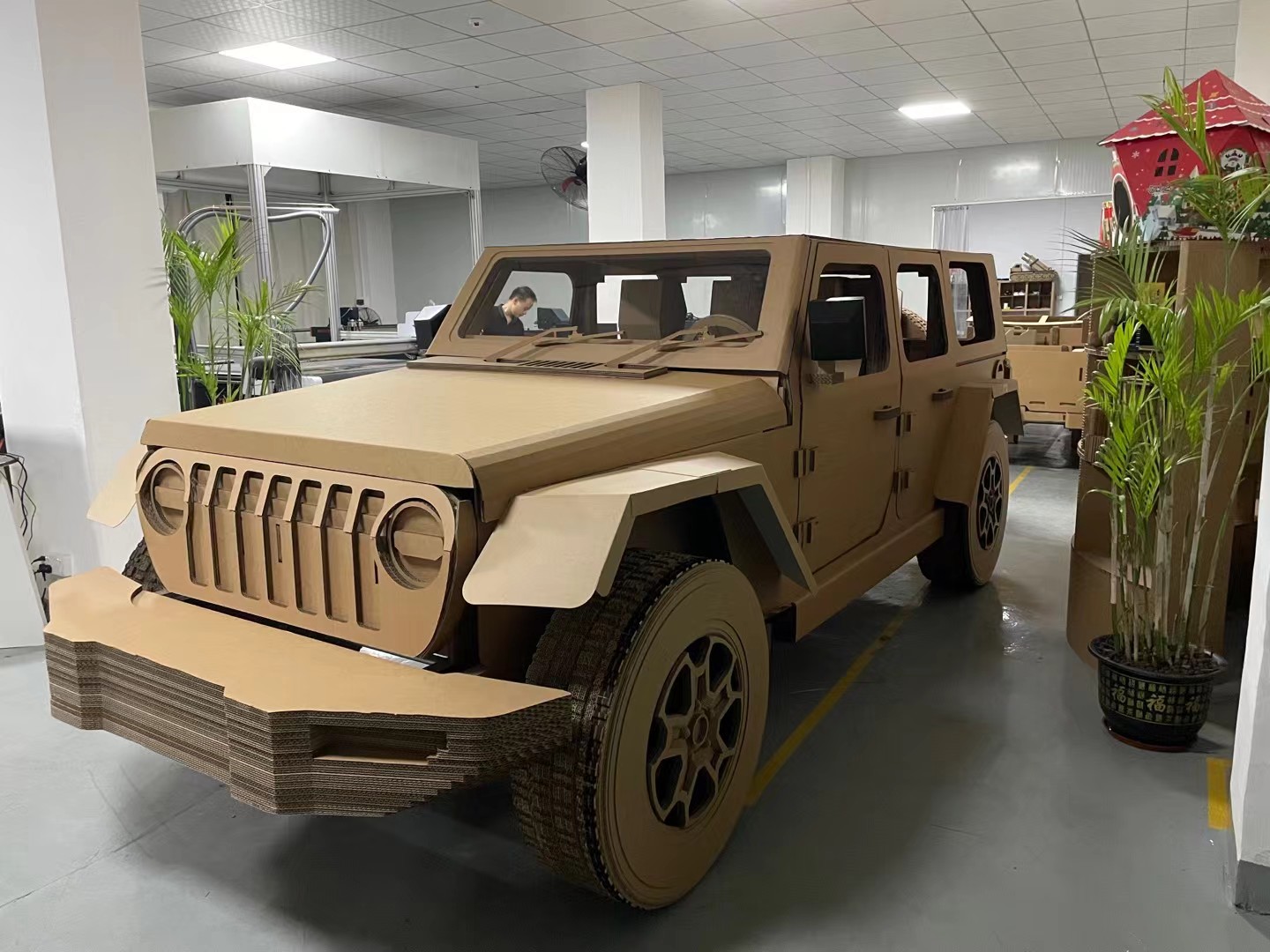
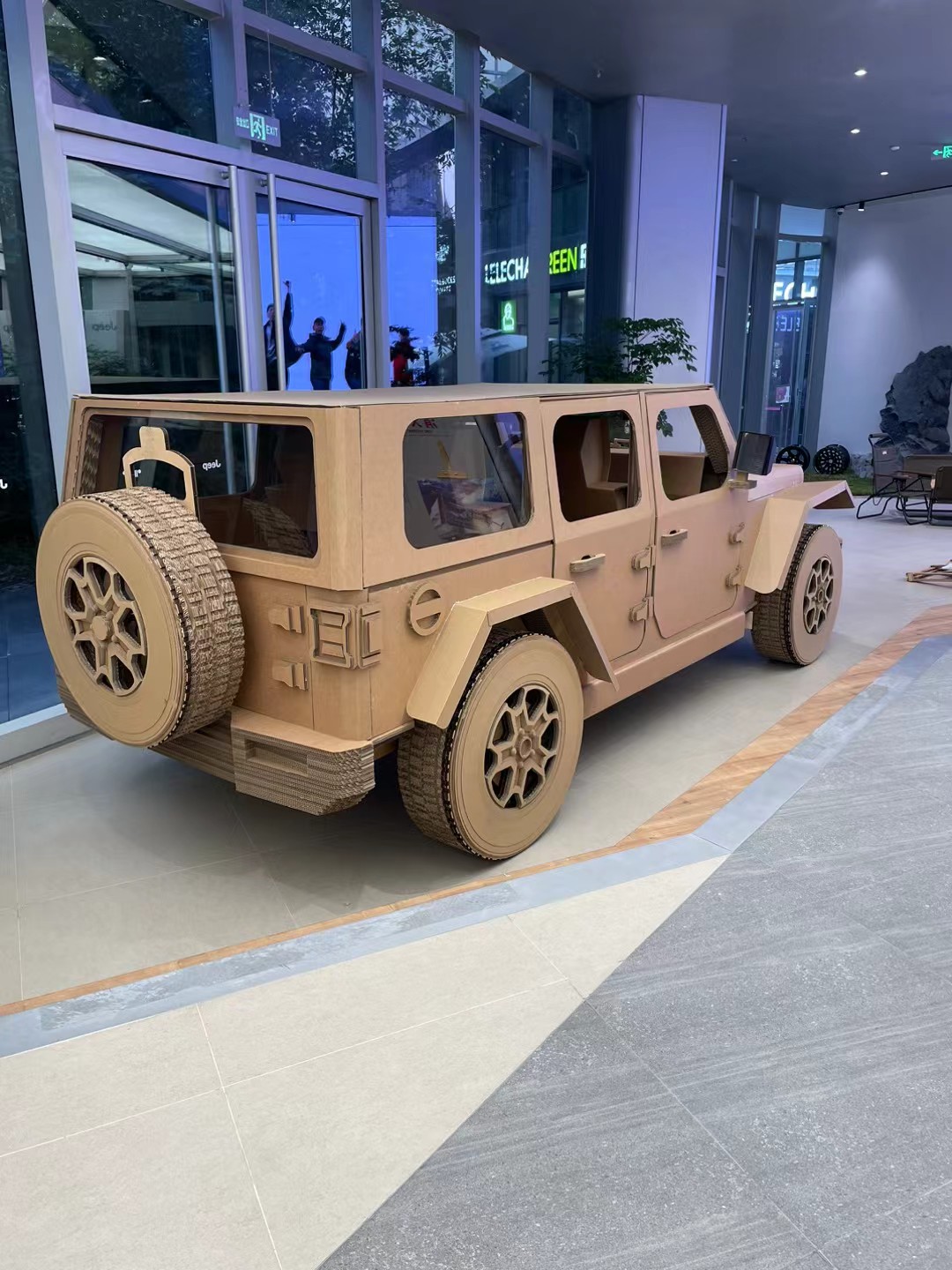
Jeep spent 80 years proving that a good vehicle can survive the worst roads. ZCCUTTER spent 17 years proving that a good machine can survive retesting. In 2023, we invested 45 days into building a full-scale corrugated cardboard Jeep Wrangler — 1:1 dimensions, over 800 individual parts, a five-person team, entirely self-executed from 3D modeling through final assembly. The completed vehicle was placed in the Jeep Exploration Center on Wuzhong Road in Shanghai, displayed alongside real vehicles.
In the West, Jeep is more than a vehicle brand. The Trail Rated badge represents an engineering promise: this vehicle has endured the worst terrain, so you can trust it on any road. Our decision to replicate a Jeep Wrangler in corrugated cardboard was not an exercise in brand tribute — it was a deliberate adoption of that same "proven under pressure" engineering language. The message to our international customers was clear: ZCCUTTER equipment has undergone the same caliber of stress testing.
This project may seem unrelated to selling cutting machines. But it directly answers the three questions that matter most to buyers.
Why Build a Cardboard Car
We are an equipment manufacturer. When customers evaluate a digital cutting system, their decision typically hinges on three dimensions:
Can the machine maintain precision over extended continuous production without degradation? Does the supplier possess sufficient process expertise to handle diverse materials? And does the supplier have the problem-solving capability to deliver beyond standardized equipment?
These questions cannot be answered through a product brochure. We needed a project complex enough to provide verifiable proof. Building a 1:1 full-scale vehicle entirely from corrugated cardboard met every criterion:
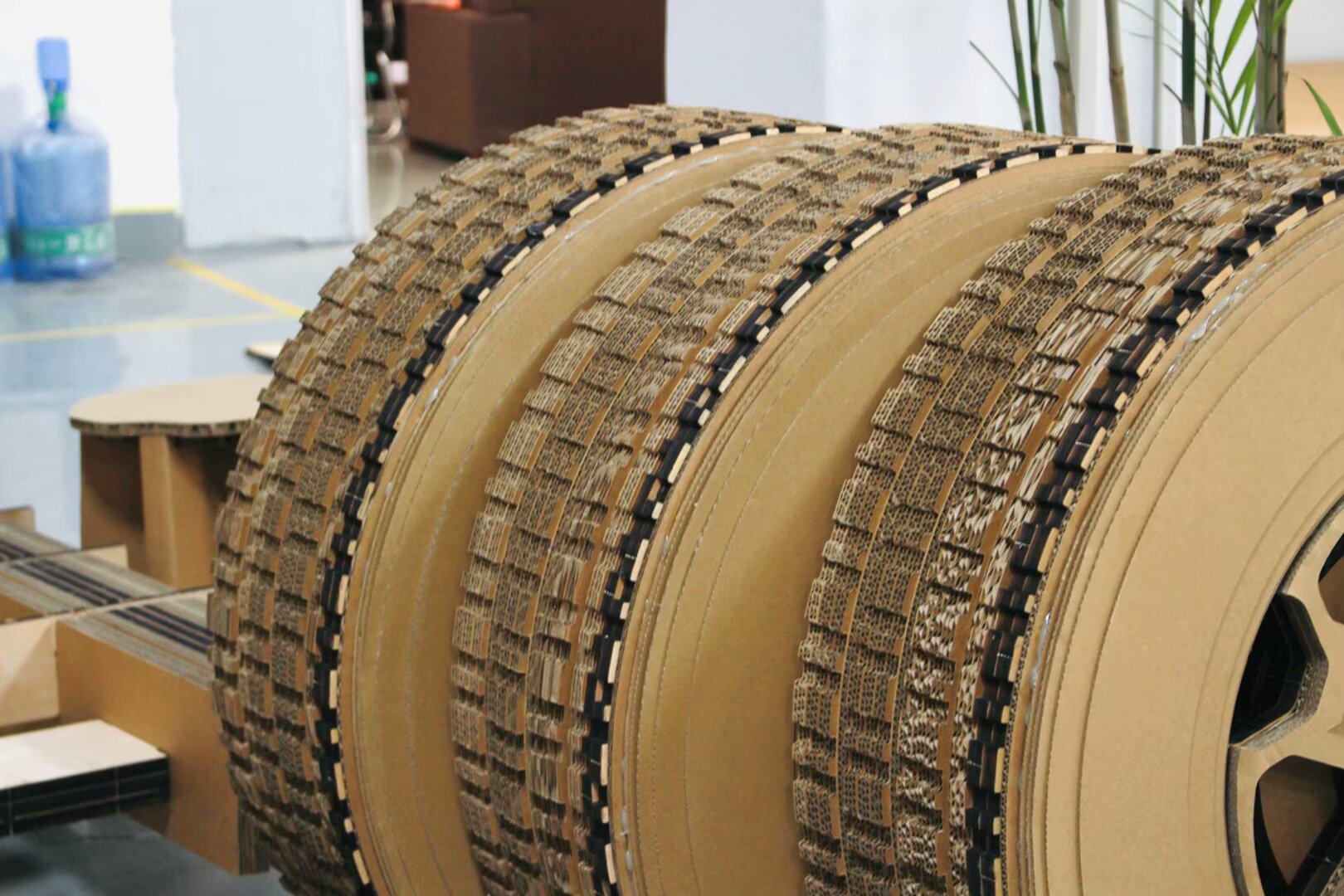
The part count exceeded 800, requiring extended processing time — enough to expose any sustained-operation weakness. Corrugated cardboard is widely recognized as one of the most challenging materials to process: it crushes easily, fibers tear, and layers delaminate. Knife-head selection, frequency matching, and speed control demand extreme precision. And working from photographs alone — with no engineering drawings — the team had to independently complete modeling, part decomposition, and process design, testing the full depth of our technical capability.
We did not do this for marketing. We did it to subject ourselves to a genuine pressure test.
Three Validations Completed in 45 Days
Validation 1: Continuous Production Capability
The Jeep project required 800+ individual parts — each one needing to meet the same tolerance standard. There was no room for "the first batch is good, but later parts drift." We ran the ZCCUTTER cutting system continuously for 72 hours, recording three critical data streams throughout:
Blade wear curve: tracking the service life of each knife head, determining replacement intervals, and measuring precision recovery after blade changes. Processing consistency: comparing dimensional accuracy between parts produced at hour 1 and hour 72 to detect any systematic drift. Failure rate: logging every unplanned stoppage within the 72-hour window, including root cause analysis.
After 72 hours, we produced a dataset robust enough to serve as a factory acceptance benchmark. These data points were subsequently integrated into our standard pre-shipment reliability testing protocol.
Jeep uses Trail Rated certification to prove it can handle extreme terrain. We used 72 hours of continuous operation data to prove ZCCUTTER can handle extreme production demands.
Validation 2: Process Database Coverage
Corrugated cardboard comes in numerous specifications — varying grammage, flute profiles (B, E, F flute), and layer counts (single, double, triple wall). Each configuration demands different cutting parameters.
For this project, we completed full parameter calibration for every board type used, covering: knife-head model and edge angle selection; oscillation frequency matched to travel speed; and vacuum hold-down pressure calibrated to material fixation method.
All parameters were documented and integrated into our process database as the standard configuration for these material types. Future projects using similar materials can directly call these presets — no re-calibration needed.
Every Jeep model has its own engineering calibration specs. Every material we process has ours.
Validation 3: Zero-to-One Engineering Capability
Jeep provided exterior photographs of the Wrangler — nothing more. No engineering drawings. No part decomposition data. No assembly instructions.
Our team independently executed the entire workflow: Full vehicle modeling — reconstructing proportions, surfaces, and structural logic from photographs alone. Part decomposition — breaking the complete vehicle into 800+ individually processable parts, each accounting for corrugated grain direction, load-bearing logic, and joint methodology. Toolpath programming — writing cutting paths for every part to ensure clean edges and precise joint fitment. Assembly verification — hand-assembling all parts and correcting any deviations from the design or manufacturing stages.
The entire process — from first model to final assembly — took 45 days. The engineering files and parameter records generated during this process now serve as a reference baseline for similar future projects.
Jeep's engineers built a road from wilderness. We built a car from a photograph.
Results and Reusable Assets
The finished cardboard Jeep passed basic structural load testing: four adult males sat on the vehicle simultaneously with no structural failure.
The piece was subsequently collected by the Jeep Exploration Center on Wuzhong Road in Shanghai and displayed alongside real vehicles. Jeep did not pay for the piece, nor did they request modifications — which we take as their endorsement of its craft fidelity and structural integrity.
For us, this cardboard vehicle generated no direct sales revenue. But it produced three reusable assets:
72-hour continuous-run equipment reliability data — now embedded in our factory acceptance standards. A complete cutting parameter archive for corrugated cardboard — directly callable for future projects. A proven engineering translation workflow — from photograph to physical product, documented and repeatable.
These three assets are worth more than the cardboard vehicle itself.
What This Means
We did not build this cardboard vehicle to attract attention. We built it to answer a question: Can a cutting machine manufactured in China withstand 72 continuous hours of verification? Can it process over 800 uniquely shaped parts without error? Can it take a single photograph and deliver a complete physical product?
The answer is yes. And we retained all the data — available for retesting at any time.
We respect Jeep, but we do not imitate Jeep. We are not the Chinese Jeep, nor the Chinese Zünd. We are ZCCUTTER — the kind of company obsessed with materials.
Jeep spent 80 years proving a good vehicle survives the worst roads. ZCCUTTER spent 17 years, 72 hours, and 45 days proving a good machine survives retesting — and a good team survives rigorous accountability.
We are an equipment manufacturer. But first, we used a cardboard car to rebuild what "equipment manufacturer" actually means.